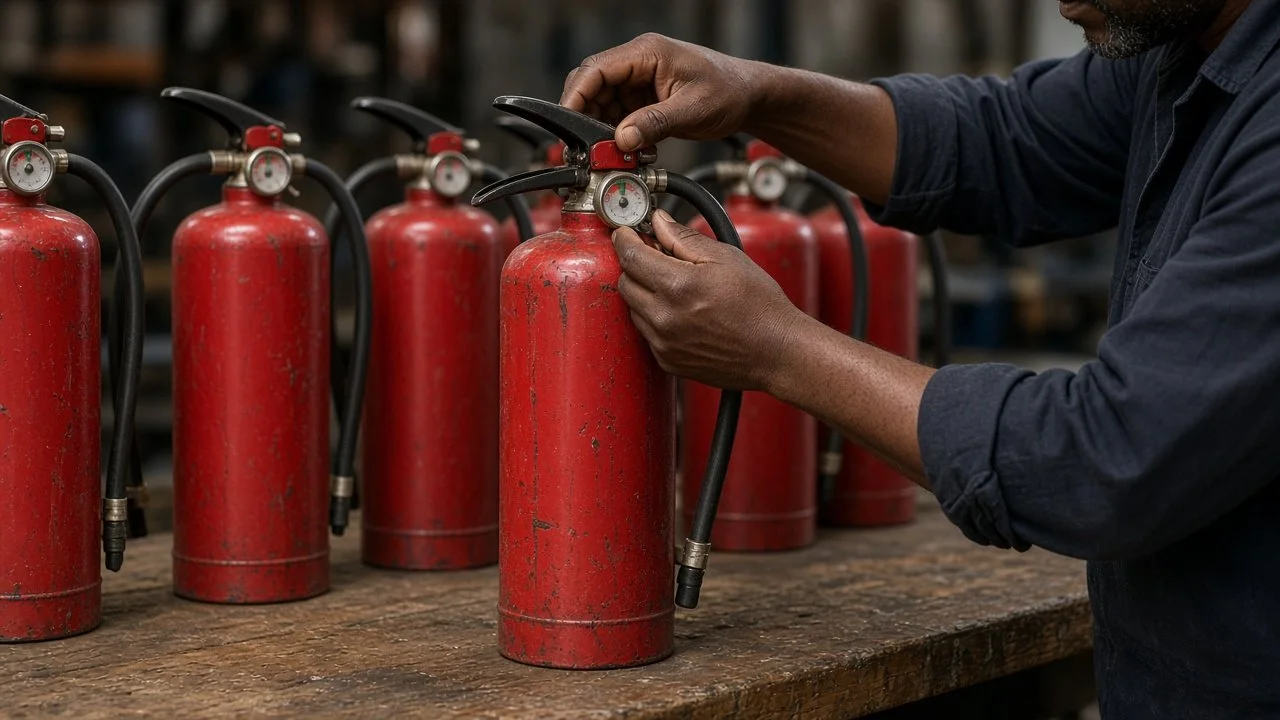
The start of the year is the easiest time to get ahead of annual LSA servicing. Certificates issued last winter will start to fall due in the months ahead, and a liferaft, lifejacket or extinguisher that expires during a tight port stay is harder to recover than one you planned for in January.
For ship operators, masters and superintendents calling The Bahamas or South Florida, a simple calendar now saves a scramble later. This article sets out what typically comes due each year, how to read your existing certificates, and how to book the work around a call at Freeport, Port Everglades or Miami.
Why annual LSA servicing belongs on the January list
SOLAS requires life-saving appliances and fire-fighting equipment to be maintained in working order and serviced at set intervals. For inflatable liferafts, the usual interval is not more than 12 months, at an approved service station. An administration may allow a limited extension when servicing is impracticable, but that is a fallback, not a plan. Inflatable lifejackets and many immersion suits follow the maker's service schedule, which is often annual. Portable fire extinguishers are inspected and serviced on a regular cycle, with hydrostatic testing at longer intervals set by the maker, flag and classification society.
EPIRBs require annual testing, with shore-based maintenance at longer intervals. SARTs, hydrostatic release units and pyrotechnics each carry their own due dates. What is easy to miss is how those dates cluster, especially if several appliances were attended at the same call last year.
January is a good time to lay the dates out, because the first-quarter port programme is usually clearer than it will be in mid-summer, and because Atlantic hurricane season, from June to November, can narrow your options later in the year.
What usually falls due each year
Work through the safety inventory in groups, rather than item by item at random.
Liferafts. Check the last service date and the station stamp on each raft. Note whether the vessel can land rafts for servicing or whether a raft exchange would better suit a short stay. Exchange lets a vessel sail with certified rafts and collect its own units on a later call, which matters when time alongside is measured in hours.
Lifejackets and immersion suits. Inflatable jackets and many suits need periodic professional service as well as the crew's monthly checks. Look at the maker's instructions and the last workshop date, not only the condition of the fabric.
Fire-fighting equipment. Portable extinguishers, and where fitted other fire equipment due for annual attention, should be listed with any hydrostatic test dates that will fall this year. Fixed systems and breathing apparatus follow their own IMO and maker schedules; if those dates fall in the same window, it is worth coordinating the call.
EPIRBs, SARTs and hydrostatic release units. Annual tests and any shore-based or replacement due dates should sit on the same calendar as the rafts, because they are often attended together.
Pyrotechnics. Distress rockets, handheld flares and smokes have printed expiry dates. They are easy to overlook until a deficiency is raised. Order replacements with enough lead time so the old stock can be landed and the new stock placed before the date on the label.
LSE Servicing & Support at Russmill Maritime Services covers liferafts, lifejackets, extinguishers, EPIRBs, SARTs, hydrostatic testing and related fire-fighting equipment for vessels calling The Bahamas and South Florida. Russmill is an authorized service provider for Jotron, Survitec and Crewsaver equipment. That authorization matters because many makers require work to be done by an approved station if the certificate is to remain valid.
Build a simple calendar from your certificates
You do not need a new system. A spreadsheet or the planned-maintenance software you already use is enough.
- List every liferaft, jacket type, suit, extinguisher group, EPIRB, SART, hydrostatic release unit and pyrotechnic lot, with the last service or expiry date and the due date.
- Group items that can be attended on the same call.
- Match those groups to the vessel's intended ports in The Bahamas and Florida over the next 12 months.
- Add a planning margin of a few weeks, so a delayed arrival does not push you past the due date.
- Flag any item whose due date sits inside hurricane season, and try to bring that work forward into the spring.
If a five-year hydrostatic test, a longer-interval EPIRB shore-based service, or load testing of lifting appliances also falls this year, mark it now. Those jobs take more coordination than a standard annual inspection.
Keep copies of the current certificates in a place the master, the safety officer and the office can all see. When you request a quote, send the list, the due dates, the vessel name, the ETA and the port or berth. That is enough for a service team to tell you whether the work can be completed in the stay, whether an exchange is wiser, or whether part of the job should be booked for the next call. The FAQs set out what to include in an enquiry and how to reach each department.
Short stays, exchanges and annual contracts
Many tankers, container vessels and other commercial ships through Freeport Harbour, Freeport Container Port, the Grand Bahama Shipyard, South Riding Point, BORCO, Port Everglades and the Port of Miami are alongside only briefly. Annual LSA and FFE service contracts and liferaft exchange exist for that reason. A contract lets you plan the year's work against known due dates, rather than negotiating each visit from scratch. Exchange keeps a vessel on schedule when there is not enough time to pack and return the same rafts.
If time is short, say so when you make the enquiry. It is better to design the call around an exchange or a split job than to hope a full pack can be finished before sailing.
Coordinating the work with a Bahamas or Florida call
If the same call also needs ship supply, load testing or agency attendance, tell the teams early so the workshop and the agent's paperwork are not competing for the same hours.
For vessels calling Freeport, the Grand Bahama Shipyard or the Florida ports, send the servicing list with the first enquiry, not after the vessel is inbound. Russmill Maritime Services responds to quote requests within 12 to 24 hours. For urgent vessel needs, the 24-hour line is +1 242 821 7780. Office hours are Monday to Friday, 9:00 am to 5:30 pm.
Frequently asked questions
How often do inflatable liferafts have to be serviced? Under SOLAS, inflatable liferafts are normally serviced at intervals not exceeding 12 months, at an approved service station. A flag administration may permit a limited extension if servicing is impracticable, but owners should plan to the 12-month date.
Can the work be done if the vessel is only in port for a short time? Often, yes, if you say so in advance. Liferaft exchange and annual service contracts are the usual ways to keep a short stay on schedule and still leave with valid certificates.
What should we send with a servicing enquiry? The vessel name, ETA, port or berth, a list of the equipment and due dates, and any maker or serial details on the current certificates. The more complete the list, the faster a workable plan can be confirmed.
Book the year's LSA and FFE work now
If you already know which appliances fall due in the next quarter, send the list through the LSE/FFE contact form or email lse.ffe.services@russmillmaritime.com. We will come back within 12 to 24 hours with a plan that fits the call.x