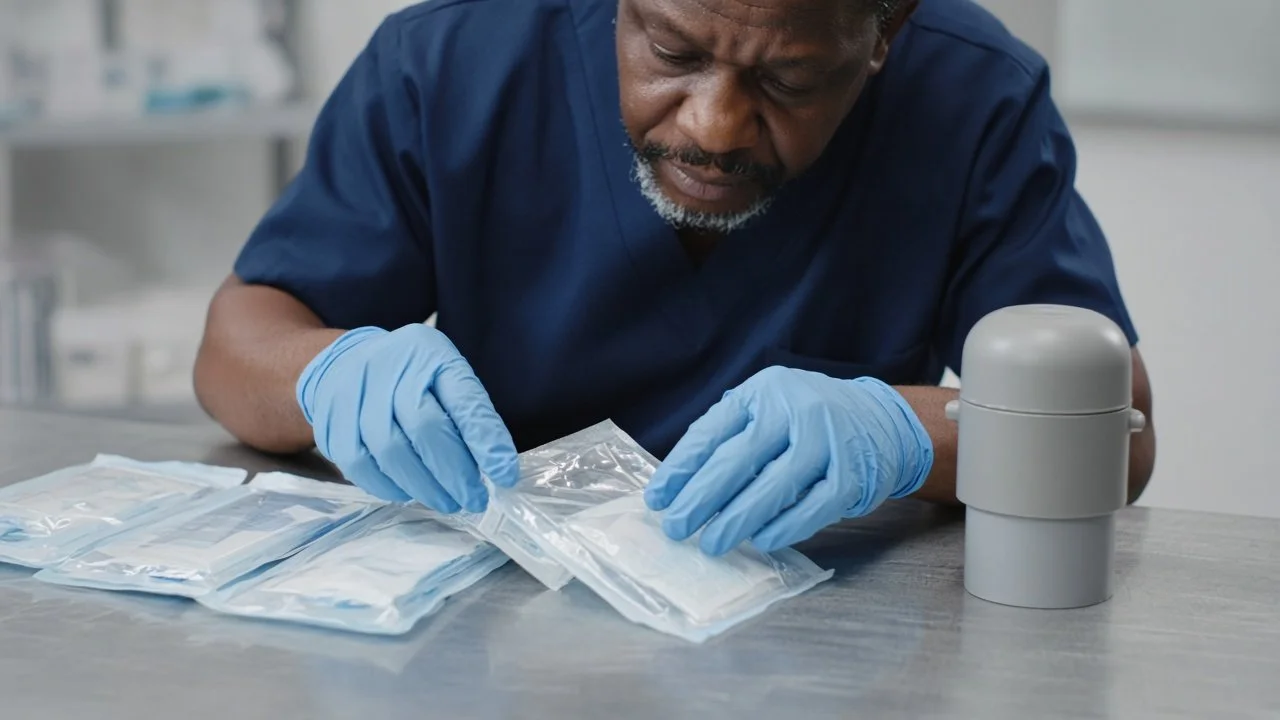

Ship medical supplies are often checked only when something is used, or when an inspector asks to see the chest. That is how expiry dates slip, how a required item is discovered missing on a Sunday, and how a short port stay turns into a scramble for oxygen or a controlled medicine that cannot be produced in an hour.
This article is a practical guide for masters, medical officers and superintendents. It covers how to keep the chest current between calls, what to send with an enquiry, and how to time an order for Freeport, Port Everglades or Miami. The exact contents of the chest are set by the flag, the ship's size and complement, and any national medical guide the administration requires. Those lists are not reproduced here.
Why ship medical supplies need a routine, not a last-minute list
The medical chest is part of the ship's safety equipment. Flag rules, and in many cases the International Medical Guide for Ships or a national equivalent, set out what should be on board, how it should be stored, and who may use it. Some items have a short shelf life. Some are controlled. Oxygen and certain medicines cannot be treated like ordinary cabin stores.
A good routine is simple. Once a month, or at the same time as the other safety rounds, someone competent goes through the chest, checks quantities and expiry dates, and notes anything used since the last round. That list, not a memory of what was there at the start of the contract, is what should go to the office and to the supplier.
Leaving the check until the ship is inbound for a short call is how the order arrives after the cut-off, or with a description so vague that the item cannot be sourced in time.
What to send with a medical stores enquiry
When you request ship medical supplies, include:
- The vessel name, flag, complement and ETA, with the port or berth
- A line-by-line list, with the name, strength, form and quantity of each item, not a generic request for "medical stores"
- Expiry dates of stock already on board, so replacements can be timed rather than doubled
- Any flag or company checklist you are working from
- Whether oxygen, or any other item with special handling, is required
- A contact on board and in the office, and whether the delivery must reach the gangway on the same call
Ship Supply at Russmill Maritime Services includes medical stores and oxygen, along with the other provisions and technical stores a vessel may need on the same visit. Everything is priced by quote. Send the list through the ship supply contact form or to ops@russmillmaritime.com, or use the request a quote form if you are also sending a wider requisition.
Quote requests are answered within 12 to 24 hours. For urgent vessel needs, call the 24-hour line, +1 242 821 7780. Office hours are Monday to Friday, 9:00 am to 5:30 pm.
Timing the order around a port call
Some medical items can be assembled quickly when they are in regular stock. Others take longer, especially if they are controlled, rarely held, or have to travel with special handling. Oxygen is a good example: it is a routine need, but it is not a last-hour afterthought.
If the ship is bound for Freeport or another Grand Bahama facility, send the list as soon as the call is reasonably firm. If the call is at Port Everglades or the Port of Miami, the same rule applies; Russmill also works from its North American warehouse in Fort Lauderdale, which can be useful for a Florida turn. Say whether the delivery must be to the gangway on arrival, and whether any item can follow if it cannot be produced in time.
Do not hold an entire stores requisition because the medical list is still being typed. Send the medical lines first if they are urgent, and the balance as a follow-up.
It also helps to say whether the ship is mid-contract or at the start of a voyage. A chest that must last several weeks, or that must cover a larger complement after a crew change, should be ordered on that basis, not on the last voyage's leftovers. If a doctor or a flag inspector has already noted a gap, attach that note to the enquiry so the item is not missed again.
Used and expired stock should be landed in the way the port and the supplier advise. Do not put expired medicines back into the chest, and do not dispose of controlled items over the side.
Frequently asked questions
Can you use a previous voyage's list? Only as a starting point. Quantities and expiry dates change, and the flag list may have been updated. Send a current inventory with the enquiry.
What if we are not sure of the correct name or strength? Send a photograph of the packaging and the flag checklist line, rather than guessing. A wrong strength is worse than a short delay.
Can medical stores be delivered with the rest of the provisions? Often yes, when the cut-off allows. Tell the supplier if anything in the medical list needs separate handling, including oxygen.
Send the chest list before the ship is inbound
If you already have a medical-stores list for a Bahamas or Florida call, send it through the ship supply contact form or email ops@russmillmaritime.com. We will respond within 12 to 24 hours and tell you what can be ready for the stay.Ship medical supplies are often checked only when something is used, or when an inspector asks to see the chest. That is how expiry dates slip, how a required item is discovered missing on a Sunday, and how a short port stay turns into a scramble for oxygen or a controlled medicine that cannot be produced in an hour.
This article is a practical guide for masters, medical officers and superintendents. It covers how to keep the chest current between calls, what to send with an enquiry, and how to time an order for Freeport, Port Everglades or Miami. The exact contents of the chest are set by the flag, the ship's size and complement, and any national medical guide the administration requires. Those lists are not reproduced here.
Why ship medical supplies need a routine, not a last-minute list
The medical chest is part of the ship's safety equipment. Flag rules, and in many cases the International Medical Guide for Ships or a national equivalent, set out what should be on board, how it should be stored, and who may use it. Some items have a short shelf life. Some are controlled. Oxygen and certain medicines cannot be treated like ordinary cabin stores.
A good routine is simple. Once a month, or at the same time as the other safety rounds, someone competent goes through the chest, checks quantities and expiry dates, and notes anything used since the last round. That list, not a memory of what was there at the start of the contract, is what should go to the office and to the supplier.
Leaving the check until the ship is inbound for a short call is how the order arrives after the cut-off, or with a description so vague that the item cannot be sourced in time.
What to send with a medical stores enquiry
When you request ship medical supplies, include:
- The vessel name, flag, complement and ETA, with the port or berth
- A line-by-line list, with the name, strength, form and quantity of each item, not a generic request for "medical stores"
- Expiry dates of stock already on board, so replacements can be timed rather than doubled
- Any flag or company checklist you are working from
- Whether oxygen, or any other item with special handling, is required
- A contact on board and in the office, and whether the delivery must reach the gangway on the same call
Ship Supply at Russmill Maritime Services includes medical stores and oxygen, along with the other provisions and technical stores a vessel may need on the same visit. Everything is priced by quote. Send the list through the ship supply contact form or to ops@russmillmaritime.com, or use the request a quote form if you are also sending a wider requisition.
Quote requests are answered within 12 to 24 hours. For urgent vessel needs, call the 24-hour line, +1 242 821 7780. Office hours are Monday to Friday, 9:00 am to 5:30 pm.
Timing the order around a port call
Some medical items can be assembled quickly when they are in regular stock. Others take longer, especially if they are controlled, rarely held, or have to travel with special handling. Oxygen is a good example: it is a routine need, but it is not a last-hour afterthought.
If the ship is bound for Freeport or another Grand Bahama facility, send the list as soon as the call is reasonably firm. If the call is at Port Everglades or the Port of Miami, the same rule applies; Russmill also works from its North American warehouse in Fort Lauderdale, which can be useful for a Florida turn. Say whether the delivery must be to the gangway on arrival, and whether any item can follow if it cannot be produced in time.
Do not hold an entire stores requisition because the medical list is still being typed. Send the medical lines first if they are urgent, and the balance as a follow-up.
It also helps to say whether the ship is mid-contract or at the start of a voyage. A chest that must last several weeks, or that must cover a larger complement after a crew change, should be ordered on that basis, not on the last voyage's leftovers. If a doctor or a flag inspector has already noted a gap, attach that note to the enquiry so the item is not missed again.
Used and expired stock should be landed in the way the port and the supplier advise. Do not put expired medicines back into the chest, and do not dispose of controlled items over the side.
Frequently asked questions
Can you use a previous voyage's list? Only as a starting point. Quantities and expiry dates change, and the flag list may have been updated. Send a current inventory with the enquiry.
What if we are not sure of the correct name or strength? Send a photograph of the packaging and the flag checklist line, rather than guessing. A wrong strength is worse than a short delay.
Can medical stores be delivered with the rest of the provisions? Often yes, when the cut-off allows. Tell the supplier if anything in the medical list needs separate handling, including oxygen.
Send the chest list before the ship is inbound
If you already have a medical-stores list for a Bahamas or Florida call, send it through the ship supply contact form or email ops@russmillmaritime.com. We will respond within 12 to 24 hours and tell you what can be ready for the stay.