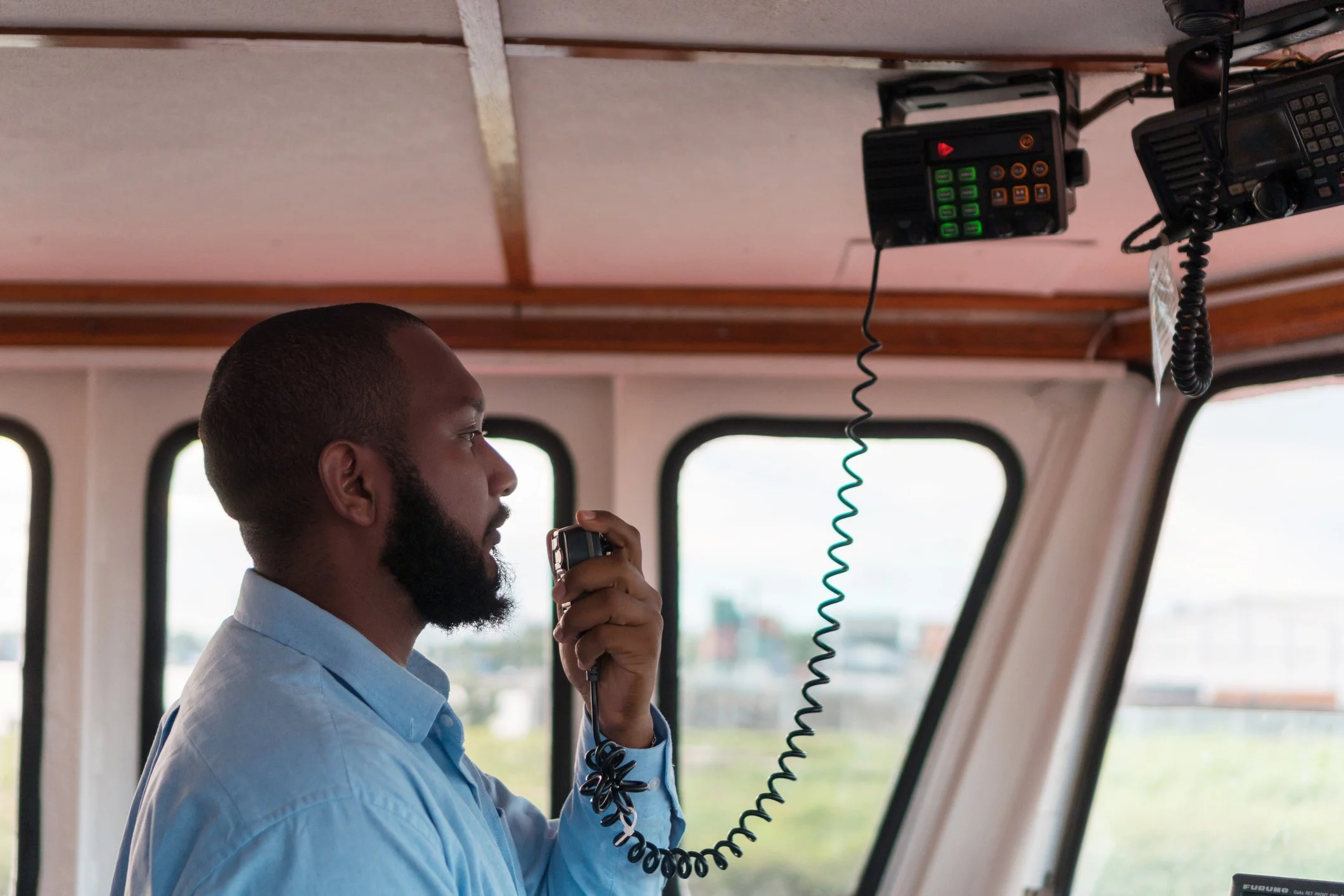

Bahamas search and rescue is something most ships hope never to need, but every master transiting Bahamian waters should know, in outline, how a distress is raised and what happens after it is heard. The islands sit on busy routes between the Atlantic, the Caribbean and the Florida approaches. Distances can be short on a chart and still leave a ship, a yacht or a small craft some hours from help.
This article is a practical briefing, not an official SAR manual. It does not publish a rescue co-ordination centre name or a telephone number, because those details should come from official notices and from the ship's own GMDSS documents. Official arrangements can also change. What follows is the standing picture: how a distress is normally alerted, who may take part in a response, and what the ship should do first.
How Bahamas search and rescue is usually organised
Search and rescue in Bahamian waters is a government responsibility. Official assets, including the Royal Bahamas Defence Force, may be tasked, and other government services can be involved depending on the nature of the incident. Volunteer organisations also play a recognised part. The Bahamas Air Sea Rescue Association, widely known as BASRA, is a volunteer search-and-rescue service that has long supported rescue work in Bahamian waters. None of that should be read as a substitute for the official co-ordination of a distress, or as a reason to bypass GMDSS.
Nearby, the United States Coast Guard operates in adjacent waters and may be involved in co-ordination when a case sits on or across a boundary, or when assets are already in a position to help. Ships should follow the instructions of the co-ordinating authority once contact is established, rather than assuming which service will take the lead.
The international framework is the IAMSAR Manual and the GMDSS distress and safety system. A ship in distress should use the recognised GMDSS methods first — digital selective calling, a 406 MHz EPIRB, and distress voice on the appropriate distress frequencies — rather than starting with an informal telephone call. Those methods are designed so that a shore authority, and ships in the vicinity, can receive the alert quickly and act on it. Recognised mobile satellite services form part of the same system in the sea areas for which the ship is fitted. The ship should already know which sea areas apply to the voyage, and the radio officers should be familiar with the equipment actually installed, not only with a generic checklist.
What the ship should do first
The standing actions are straightforward, and they should be drilled, not improvised:
- Raise the distress by GMDSS, and make sure the EPIRB can be activated if the situation requires it. Confirm that registration details for the beacon are current before the voyage, not during an emergency.
- Broadcast the nature of the distress, the position, the number of persons on board, and any assistance required, in the format the radio procedures require.
- Keep a continuous watch on the relevant distress and safety channels, and answer when a co-ordinating authority or another ship calls.
- If you are a ship in the vicinity, not the casualty, stand by to assist if it is safe to do so, and follow the co-ordinating authority's instructions. Do not leave the scene without being released.
- Log times, positions, messages and the actions taken. That record will matter later.
Update the position if the ship is drifting or under way, and be ready to describe the nature of the distress in plain terms as well as in the formal radio format. Medical evacuations and persons in the water are still distress or urgency situations; they should be raised through the same official channels, not through an informal call to a local contact. Life-saving appliances have to be ready as well as the radio. A well-maintained EPIRB, SART, liferafts and lifejackets are part of the same picture. LSE Servicing & Support covers that equipment when a ship is in The Bahamas or South Florida, but it is not a substitute for the ship's own drills and radio watch.
If the ship is bound for or already in port, Port Agency & Logistics should be told promptly if a medical case, a search, or a diversion will change the arrival. The FAQs set out the usual pre-arrival information; an emergency is a reason to add a clear, early update, not to wait for the standard form.
Frequently asked questions
Should we telephone a local number instead of using GMDSS? Use GMDSS first. A telephone call may be useful later, once a co-ordinating authority has been established, but it is not the primary distress method and should not replace DSC, EPIRB or distress voice.
Who is the rescue co-ordination centre for The Bahamas? Confirm the current official authority from official notices and from the ship's GMDSS documents. This article does not name a centre or give a phone number, because those details should come from an official source.
If we sight a small craft in trouble, what should we do? Render assistance if it is safe, raise or relay the distress by GMDSS, and follow the co-ordinating authority once contact is made. Do not assume that a volunteer service or a nearby patrol has already been informed.
A short closing note
This is an industry briefing, not an official SAR instruction. Russmill Maritime Services Limited is a ship supplier, service provider and port agent in The Bahamas and South Florida, not a rescue authority. For questions about an upcoming call, or about GMDSS equipment due for service, email ops@russmillmaritime.com or call +1 242 821 7780.