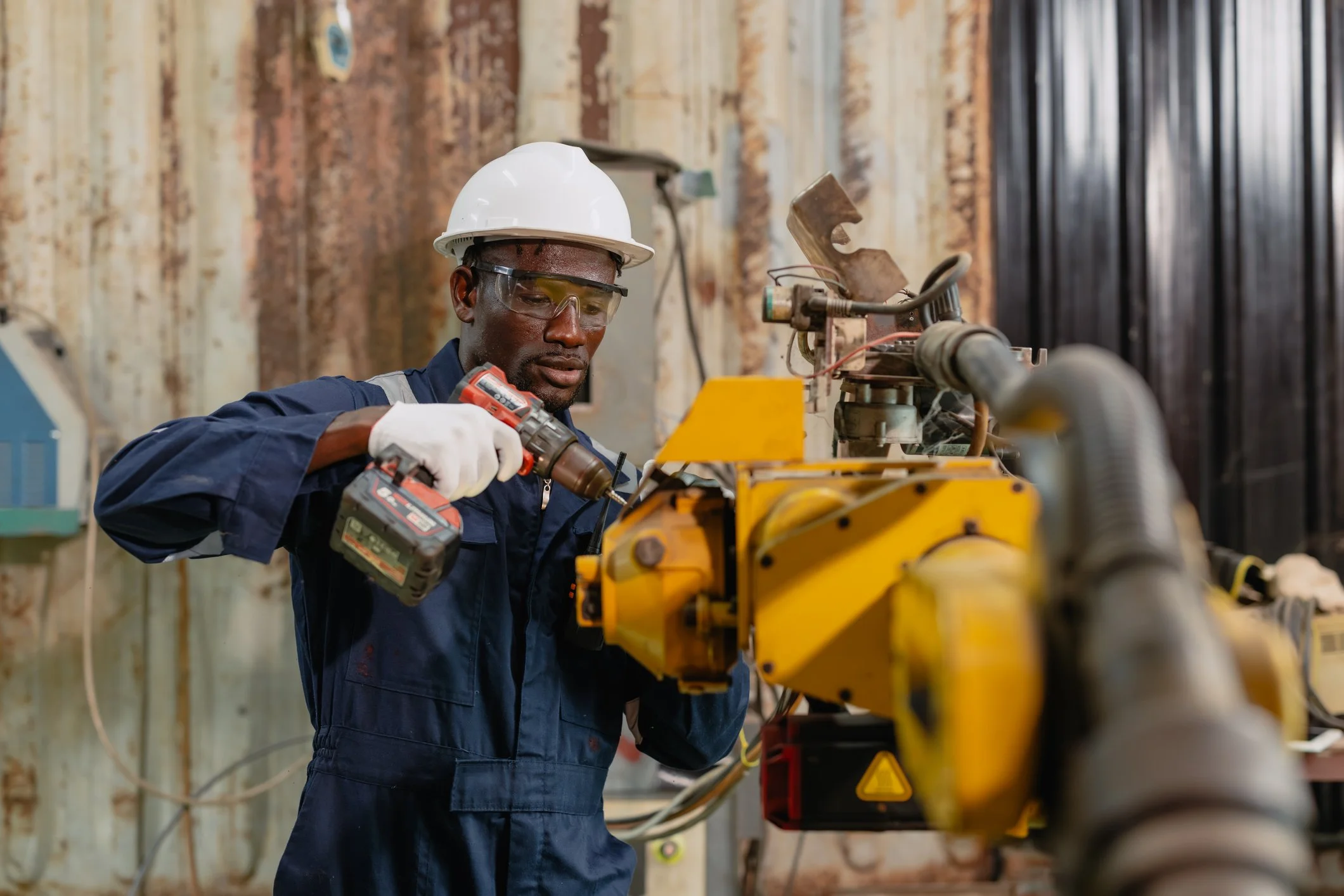

Onboard technical repairs during a short stay succeed or fail on the preparation, not on the number of hours the ship is alongside. A defect that looks simple on a morning email — a steering alarm, a starter, a leaking flange, a welding repair — can absorb the whole call if the parts, the permits, the isolation and the right trade are not already in place.
This article is for superintendents, chief engineers and masters planning work in The Bahamas or South Florida. It covers the usual sequence: define the job, send enough information, arrange access and safety, and leave time for tests and paperwork. It does not invent yard capacities, class rules or prices.
Planning onboard technical repairs before the ship is alongside
The first useful step is a clear scope. “Look at the steering” is not a job. “Investigate an intermittent steering-gear alarm, inspect the motor and starter, and advise whether a repair can be completed before sailing” is a job. The same is true for electrical faults, engine or generator work, welding, and painting that has to be done in port rather than deferred.
Send, as early as you can:
- The vessel name, ETA, berth or anchorage, and a 24-hour technical contact
- The defect, the system, and what the ship has already tried
- Maker, model and serial numbers, and any drawings, part numbers or photographs
- Whether the work is at berth, at anchor, or may need a shift
- Whether class, the flag or the port has to be notified, and whether a surveyor should attend
- Any hot-work, enclosed-space, electrical isolation or other permit the ship already expects
Marine Technical Services at Russmill Maritime Services covers onboard and workshop repairs, including electrical, steering, engine work, welding and painting, as well as load testing and dry-dock support. Send the job through the technical contact form. If the call also needs clearance, a launch or husbandry, copy Port Agency & Logistics so the technical window and the port formalities are planned together.
Safety, parts and time alongside
A repair team cannot start until the ship has isolated the system, issued the permit, and provided a responsible officer. Hot work needs a gas-free or otherwise acceptable condition, a fire watch, and a clear agreement about where sparks, heat and fumes will go. Electrical work needs isolation and, where required, a permit-to-work. None of that should be left until the technicians are already at the gangway.
Parts are the other usual delay. If a component has to be sourced, say so in the first message, and send the numbers. Some items can be drawn from local stock or from the Fort Lauderdale warehouse; others have to be ordered, and a short stay may not be long enough. It is better to know that before the ship arrives than to discover it on the last afternoon.
Decide early whether the job can reasonably be done on board, or whether a piece of equipment should be landed to a workshop. Landing needs time, lifting arrangements and a plan to get the unit back before sailing. Time alongside should include diagnosis, the repair itself, and a function test that the ship's staff can accept. If a surveyor is attending, build in their arrival and their report. The attending technicians should work under the ship's permit-to-work and with a named ship's officer, so isolation, re-instatement and testing are agreed, not assumed. Quote requests are answered within 12 to 24 hours. For urgent vessel needs, call +1 242 821 7780. Office hours are Monday to Friday, 9:00 am to 5:30 pm. Night or weekend work can sometimes be arranged, but only if the request says so clearly and the ship's safety arrangements will be in place.
After the job
Before sailing, walk the work with the attending engineer: what was found, what was repaired or replaced, what was left outstanding, and what tests were done. Keep the report, any certificates, and any replaced parts or photographs the superintendent will want to see. If a temporary repair was the only safe option in the time available, that should be written down, with a recommendation for permanent work at the next opportunity.
Frequently asked questions
Can most engine-room and electrical repairs be done at berth? Many can, if isolation, permits and parts are in place and the port allows the work. Some jobs need a workshop landing, a longer window, or conditions the berth cannot provide. That should be decided from the information you send, not assumed.
Do we need a surveyor for every repair? Not every job. If the defect affects a class or statutory item, or if the flag or class has already been notified, ask early whether attendance is required so the surveyor and the repair can be booked for the same window.
What if the stay is only a few hours? Send the scope and part numbers as soon as the need is known. A short call can still take a defined, well-prepared job. An undefined fault with no parts information usually cannot.
Send the defect list before the ship is in range
If you already have a repair list for the next Bahamas or South Florida call, send it through the technical contact form or email ops@russmillmaritime.com. We will respond within 12 to 24 hours with a plan that fits the time alongside.