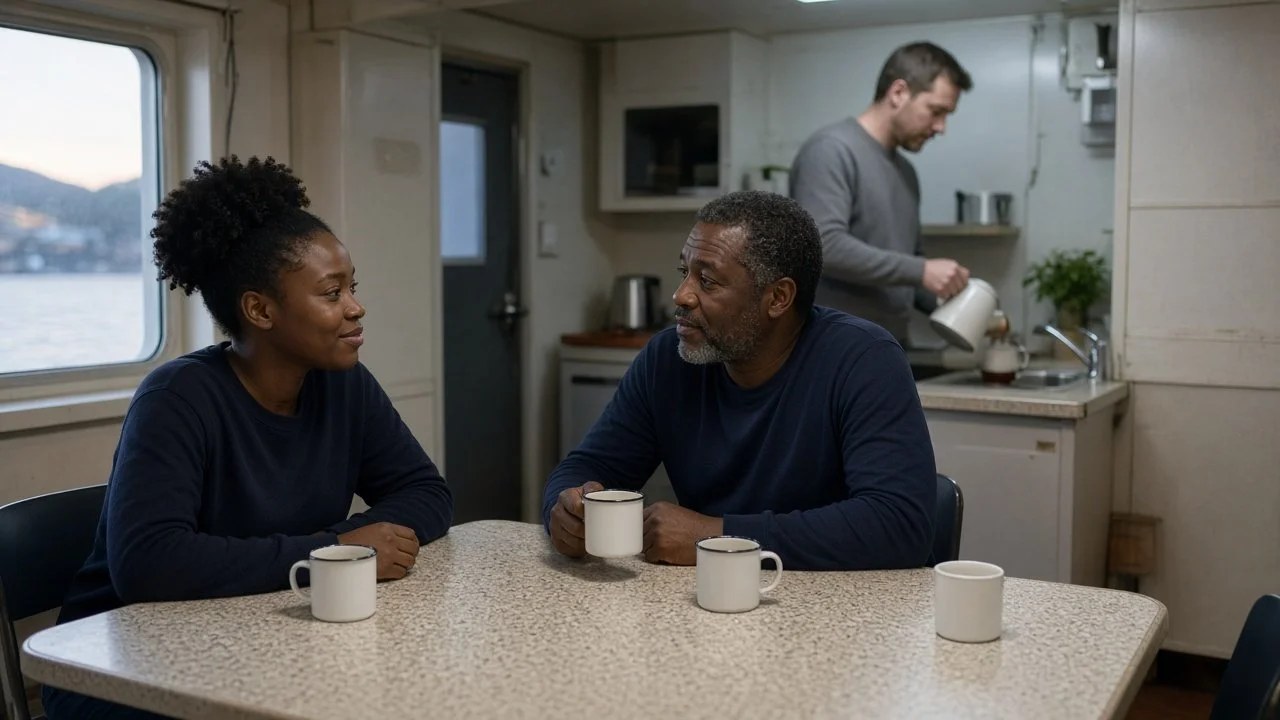

Crew welfare at sea is not a soft subject sitting to one side of the safety management system. Fatigue, isolation, poor communication with home and the feeling that a problem has nowhere to go all have a direct effect on watchkeeping, on relationships on board and on a person's ability to do the job. The Maritime Labour Convention treats decent working and living conditions as a right. Good companies treat them as an operational necessity as well.
This article is a practical briefing for masters, designated persons and crewing managers. It does not quote survey statistics, which go out of date and are easy to misuse. It sets out what usually helps, what the convention already requires in general terms, and where to point a seafarer who needs to talk to someone outside the ship.
Why crew welfare at sea belongs in ordinary management
A ship is a workplace, a home and, for long periods, a closed community. When rest hours are squeezed, when the internet does not work, when a family message cannot get through, or when bullying is left unchallenged, the effect is not only unhappiness. It shows up in errors, in arguments and, in the worst cases, in people who are no longer safe to be on watch.
None of that requires a new theory. The ISM Code already asks the company to maintain a safe working environment and to prepare for emergencies, including medical ones. The Maritime Labour Convention requires adequate accommodation, food, medical care, access to welfare facilities ashore where they exist, and measures to protect seafarers' health. Flag and port state inspections can and do look at those points.
What often sits in the gap is the day-to-day culture: whether a person can say they are struggling, whether the master has time to listen, and whether the office will support a change of crew or a medical referral when it is needed.
Practical measures that usually help
There is no single programme that fits every ship, but a number of measures are consistently useful.
Rest that is real. Hours-of-rest records should reflect what actually happened, not a tidy version prepared for an inspector. A later Brief article looks at the MLC rest-hour rules in more detail. The welfare point is simpler: a person who is short of sleep is more vulnerable, and a culture of falsifying records makes it harder to ask for help.
Contact with home. Reliable, reasonably private access to email or voice calls is one of the most effective protections against isolation. It does not have to be unlimited. It does have to work, and people should not be made to feel they are asking a favour every time they want to speak to their family.
A place to talk. The master, the medical officer or a trusted senior rating can be a first point of contact. They are not a substitute for professional help. Recognised seafarer welfare organisations, including international helplines such as those run under the ISWAN family of services, exist so that a person can speak to someone independent of the company. Those details should be posted where they can be found, including in cabins, not only in a manual in the office.
Respect on board. Harassment, discrimination and bullying are welfare issues and safety issues. The company should have a clear, usable complaint procedure and should support a master who uses it.
Shore access when the ship is in port. Where it is safe and practicable, time ashore, a visit to a seafarers' centre, or help with transport can reset a long voyage. An agent who is briefed early can often help with those arrangements during a call in The Bahamas or South Florida.
What to do when someone is in difficulty
If a seafarer is distressed, withdrawn, talking about not wanting to continue, or clearly unwell, treat it as you would any other medical or safety concern. Do not wait for the next port if the situation is urgent. Contact the company, follow the ship's medical advice arrangements, and, if you are in port or close to one, ask the agent to help with a medical referral. The 24-hour line of a port agent or the ship's medical advisory service is there for this as much as for a broken limb.
Keep the person off a safety-critical watch if they are not fit for it. Document what you have done, and protect their privacy so far as the need to keep the ship safe allows. After the immediate issue is handled, the company should look honestly at rest hours, voyage length, and whether the person needs to be relieved.
For ordinary crew changes, hospital visits or transport to a seafarers' centre, send a clear request with the port agency nomination. The FAQs list the details an agent usually needs.
Frequently asked questions
Is mental health a medical issue or a disciplinary one? It should be treated first as a health and safety issue. Fitness for duty still matters, and a person who cannot safely keep a watch should not be asked to. Punishment is not a welfare plan.
Do we have to provide internet on board? The convention and flag rules on communication have developed over time and should be checked in their current form. Regardless of the legal minimum, some reliable way to contact home is one of the most practical welfare measures a company can provide.
Where can a seafarer get independent help? Recognised seafarer welfare organisations operate confidential helplines and, in many ports, centres ashore. Post the current contact details on board and make sure people can use them in private.
A short closing note
This is an industry briefing. Russmill Maritime Services Limited can help with the port-side practicalities of a crew change, a medical call or transport during a stay in The Bahamas or South Florida. Email ops@russmillmaritime.com or call +1 242 821 7780.