Dry-dock support goes wrong most often before the ship is on the blocks. A yard period is expensive, short and crowded with class surveys, owner jobs, steel work, coatings and the ordinary needs of a crew who still have to live on board. A technical partner who receives a complete brief can plan people, equipment and materials against the window you actually have. A partner who receives a vague list after the vessel is inbound cannot.
This article is a practical checklist for superintendents, technical managers and masters preparing a dry-dock or a heavy repair call, including a stay at the Grand Bahama Shipyard or a related repair window in The Bahamas or South Florida. It does not describe the shipyard's docks, cranes or prices, which should be taken from the yard itself.
What dry-dock support actually needs to know
The first brief should answer four questions: what work is definitely required, what work is possible if time and steel allow, which surveys must be completed, and what the ship will supply itself.
Send, as early as you can:
- The vessel particulars, official numbers and a simple description of the reason for the call
- The planned docking dates, or the intended window, and any constraint on undocking
- The class and flag survey status, including any items that must be offered in dry-dock
- A numbered work list, distinguishing owner's jobs, yard jobs and jobs for a visiting contractor
- Drawings or sketches for steel, piping, tailshaft, sea valves, tanks and any known damage
- The coating specification, if painting is part of the stay, including surface-preparation standards and any limitation on products
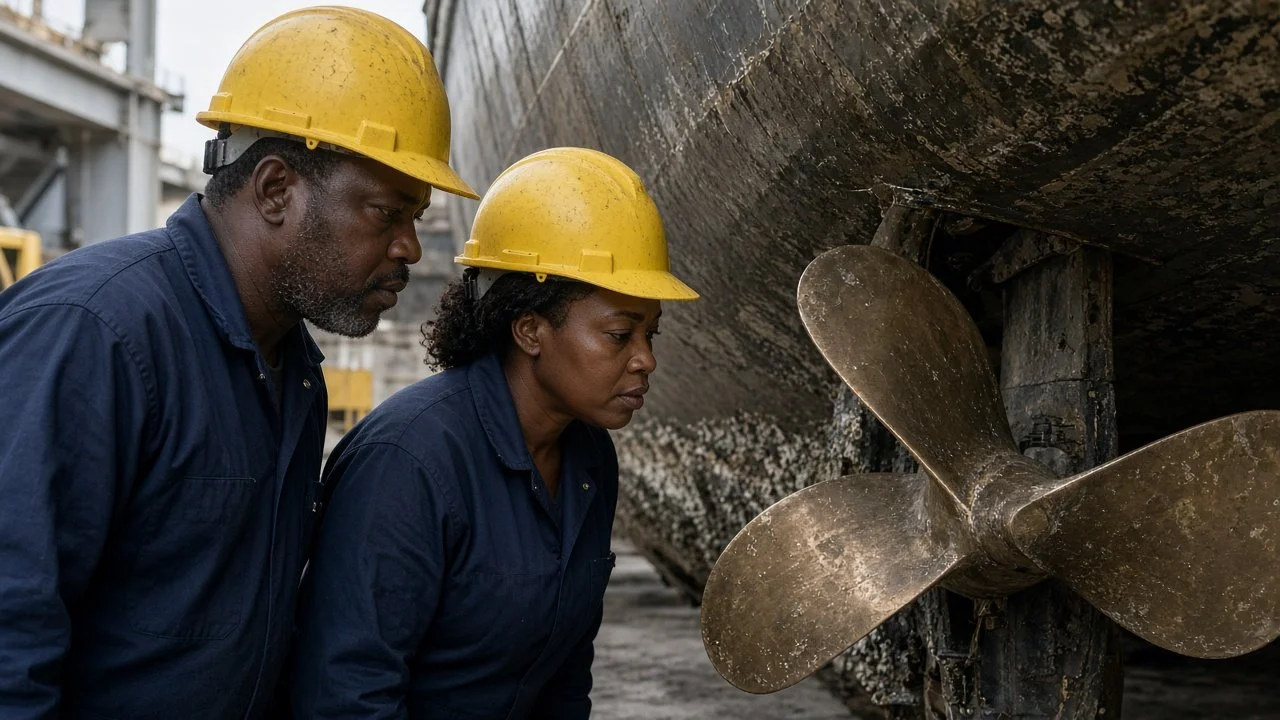
- Underwater items: hull inspection, propeller, sea chests, anodes, and whether in-water work is also planned before or after the docking
- Lifting and load-testing needs, tank or hold cleaning, and any hot work
- Owner-supplied materials, and when they will arrive
- Crew remaining on board, hotel or launch needs, and the agency nomination
A short "usual docking" message is not enough. Two ships of the same class can arrive with completely different lists.
How to structure the work list
Group the jobs in a way a planner can use.
- Survey-driven work. Items that class or flag must see in dry-dock, including any tailshaft, sea-valve, or thickness-measurement work already agreed.
- Steel and structure. Known wastage, dents, inserts and piping, with locations that match the drawings.
- Coatings. Underwater hull, topsides, tanks or decks, with the system and the required preparation.
- Machinery and underwater fittings. Propeller, rudder, stern tube, thrusters, sea chests and grids.
- Owner's contractors. Load testing, welding or fabrication, drone or close-up inspections, tank cleaning, and any maker's attendance.
- Services and logistics. Shore power, garbage, fuel, stores, spare parts to the gangway, and crew changes.
Marine Technical Services at Russmill Maritime Services include dry-dock support, welding and fabrication, painting and coatings, underwater work such as hull cleaning and inspections, load testing, tank and hold cleaning, and drone inspections. The brief should still say which of those jobs you want on this docking, rather than assuming a standard package.
Coordinating the yard, the agent and the contractors
A docking is a port call as well as a repair. Port Agency & Logistics still has to cover arrival, crew, waste, stores and owners' matters, even when the ship is in a shipyard. Name the facility in the first message. A call at the Grand Bahama Shipyard is not the same, operationally, as a call at Freeport Harbour or at a fuel terminal.
Tell the technical partner who the yard, the class surveyor and the owner's superintendent will be, and who is authorised to add or cancel work. Scope creep is normal in a docking; an uncontrolled list is not. Agree, in writing, how extra jobs will be quoted and approved, and which items can be deferred if the window shortens.
If materials, spares or coating products are coming from outside, give the arrival date and the delivery point. A spare that lands after the space is closed up is a spare for the next voyage, not for this docking.
Send the package through the technical services contact form or to ops@russmillmaritime.com. Quote requests are answered within 12 to 24 hours. For urgent vessel needs, call +1 242 821 7780. Office hours are Monday to Friday, 9:00 am to 5:30 pm.
Frequently asked questions
When should the brief be sent? As soon as the docking window is reasonably firm, and earlier if steel, coatings or owner's contractors have a long lead time. A complete list two weeks out is more useful than a perfect list the day before arrival.
Do we need to send drawings if the yard already has them? Yes, if you can. The technical partner and any visiting contractor may not have the same set, and a marked-up sketch of the actual damage is often more useful than a general arrangement alone.
Can underwater inspection or drone work still help if the ship is going into dock? Yes. A close look before docking can refine the steel and coating list. A look after undocking can confirm work that is otherwise hard to see. Say what you want inspected, and whether it is before, during or after the docking.
Send the work list before the ship is committed
If you have a dry-dock or heavy repair window coming up in The Bahamas or South Florida, send the list, the survey status and the dates through the technical services contact form or email ops@russmillmaritime.com. We will respond within 12 to 24 hours and tell you how support can be fitted to the stay.