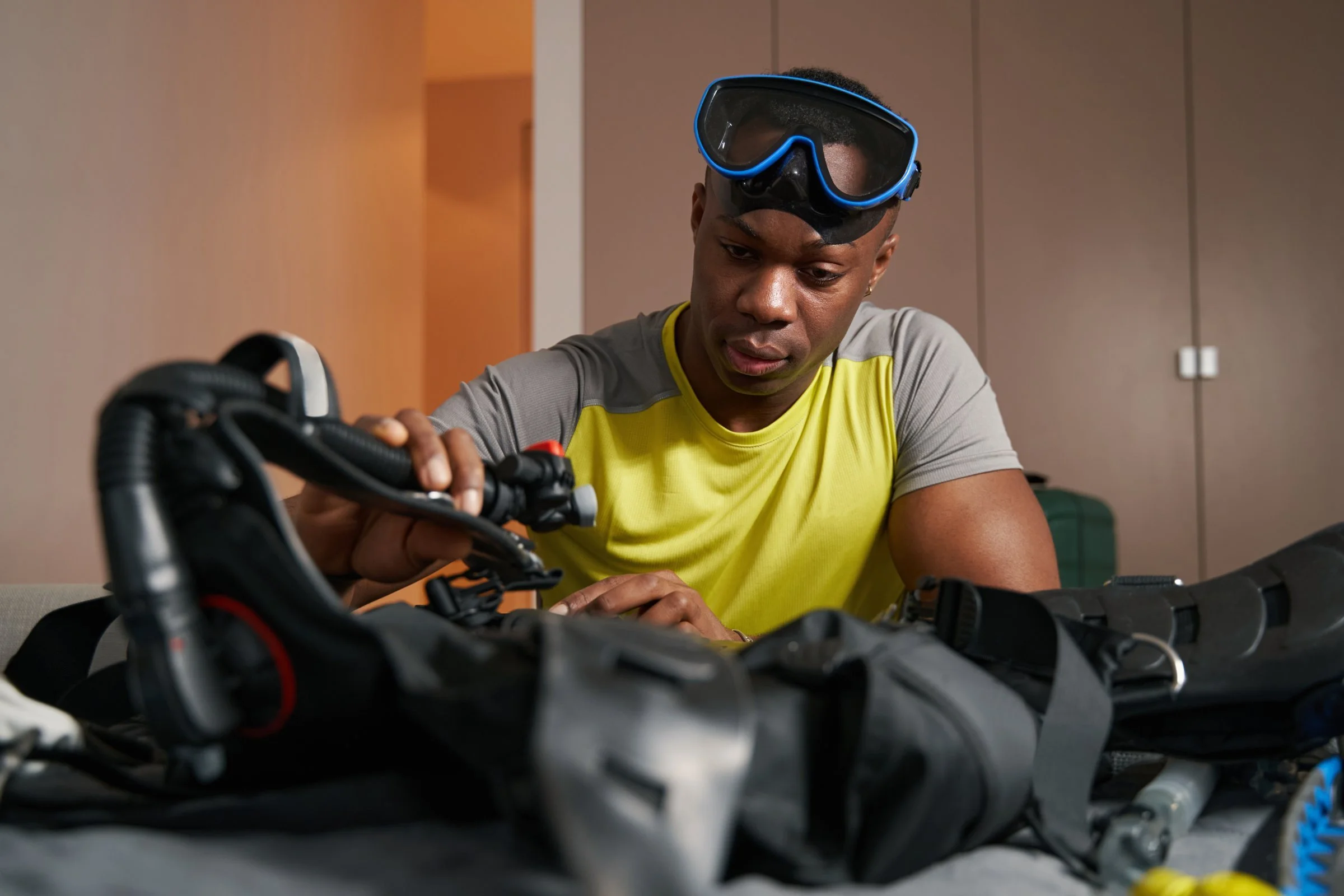

A hull cleaning inspection during a port call is easy to treat as a quick dive, until the port, the weather, or the ship's own schedule makes the work impossible on the day. Biofouling on the hull and in niches such as sea chests and propellers affects resistance, and it can also transfer invasive aquatic species. An inspection may be all that is required on a given call. A cleaning may be requested as well. Neither should be assumed to be allowed, or to be possible, until the port, the berth and the ship's condition have been checked.
This article is a practical guide for superintendents, chief engineers and masters planning underwater work in The Bahamas or South Florida. It covers what to send, what usually has to be confirmed before a diver enters the water, and how to record what was found. It does not invent port rules, coating specifications, or prices.
Planning a hull cleaning inspection before the ship is alongside
Start with a clear scope. Is the need an inspection of the hull, the propeller, the rudder, the anodes, or the sea chests? Is cleaning requested, and if so, of which areas? Has class, the flag or a charterer already asked for a report? An inspection and a cleaning are related jobs, but they are not the same permit, and they do not always take the same time.
Send, as early as you can:
- The vessel name, ETA, berth or anchorage, and a 24-hour technical contact
- The scope: inspect, clean, or both, and which areas
- The reason for the work, including any class or charter condition if there is one
- The ship's draughts, a simple sketch of the underwater arrangements if you have one, and any known damage or previous findings
- The coating in general terms if you know it, without assuming a product will be specified from the quay
- Whether the ship will be at berth or at anchor, and how long it is expected to lie still
Marine Technical Services at Russmill Maritime Services includes underwater hull cleaning and inspections. Send the job through the technical contact form. Because the work depends on access to the water and, often, on the port's permission, tell Port Agency & Logistics at the same time if the call also needs clearance or a berth arrangement.
In-water cleaning is not automatically permitted in every port or at every berth. Some authorities restrict it, or require conditions, because of the coating, the fouling that may be released, or the location. Confirm the current local position before the team is mobilised. This article does not set out a Bahamas or Florida rulebook, because those requirements should come from the port and from current official instructions.
Safety, environment and the report
A diver cannot start until the ship has agreed isolation and safety arrangements: propeller and thruster movement, overboard discharges, intakes, and a responsible officer who can stop machinery if needed. The ship's permit-to-work and the diving team's own procedures should both be in place. Weather, current and traffic alongside will also decide whether the work can go ahead.
Current IMO biofouling guidelines, and the International Convention on the Control of Harmful Anti-fouling Systems on Ships, are the international backdrop. They are not a substitute for the port's own conditions, or for the maker's instructions on a particular coating. Aggressive cleaning of a coating that is not intended to be cleaned in the water can do more harm than leaving a light slime until a planned docking. If the coating condition is unknown, an inspection first is often the safer request.
After the dive, the ship should receive a clear record of what was inspected, what was cleaned, what was found, and any areas that could not be reached. Photographs help, provided they are labelled so that a superintendent who was not on board can see which part of the hull they show. If damage, missing anodes, or a fouled sea chest is found, that should be written down in time for the ship to decide whether further work is needed before sailing.
Quote requests are answered within 12 to 24 hours. For urgent vessel needs, call +1 242 821 7780. Office hours are Monday to Friday, 9:00 am to 5:30 pm. If the stay is short, say so. An inspection of a defined area may fit a short window; a full clean may not, especially if permission, weather or isolation takes time to arrange.
Frequently asked questions
Can hull cleaning always be done at berth during a short stay? No. It depends on the port's current conditions, the berth or anchorage, the weather, and the time needed for isolation and the work itself. Ask early, and be ready to inspect first if cleaning cannot be completed.
Do we need class attendance for an underwater inspection? Not for every inspection. If class or the flag has already required a survey, or if damage is suspected, ask early whether attendance is needed so the dive and the surveyor can be planned together.
Is biofouling only an efficiency issue? No. It also matters for the transfer of aquatic species. Follow the current IMO biofouling guidelines, the ship's own management plan if it has one, and the port's instructions.
Send the scope before the ship is in range
If you already know that a hull cleaning inspection is needed on the next Bahamas or South Florida call, send the scope through the technical contact form or email ops@russmillmaritime.com. We will respond within 12 to 24 hours with a plan that fits the call and the port's conditions.