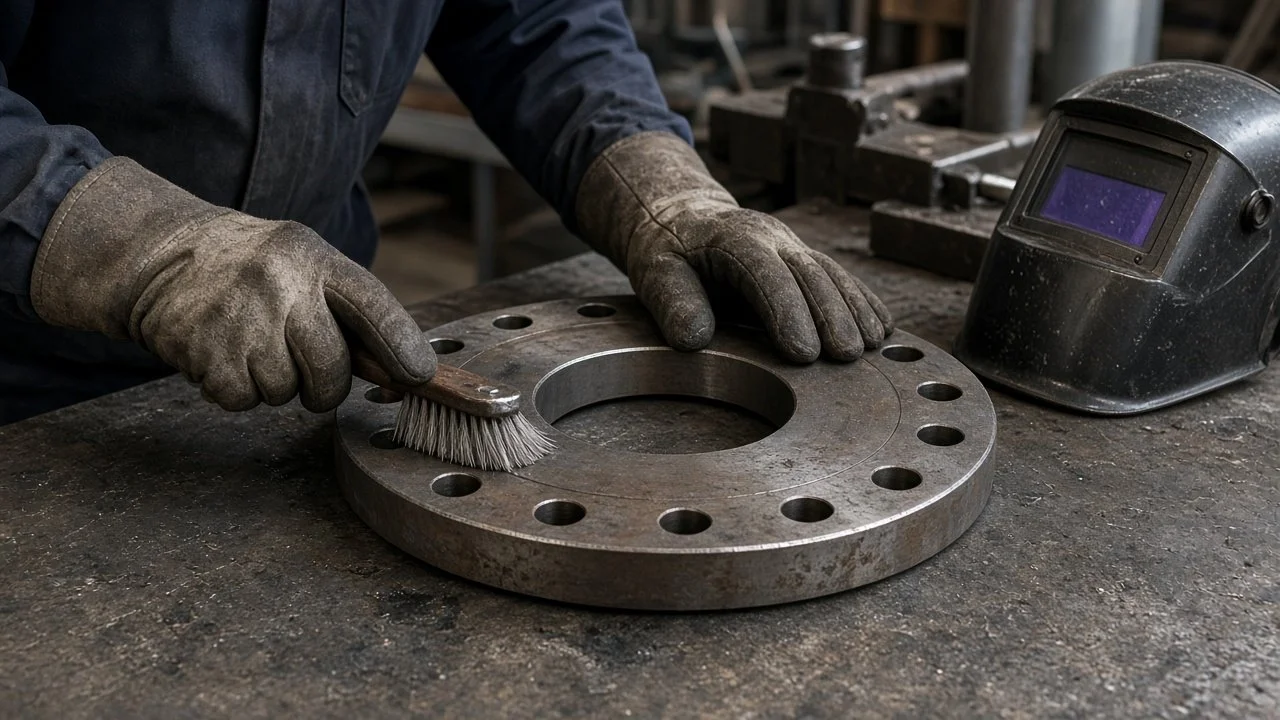

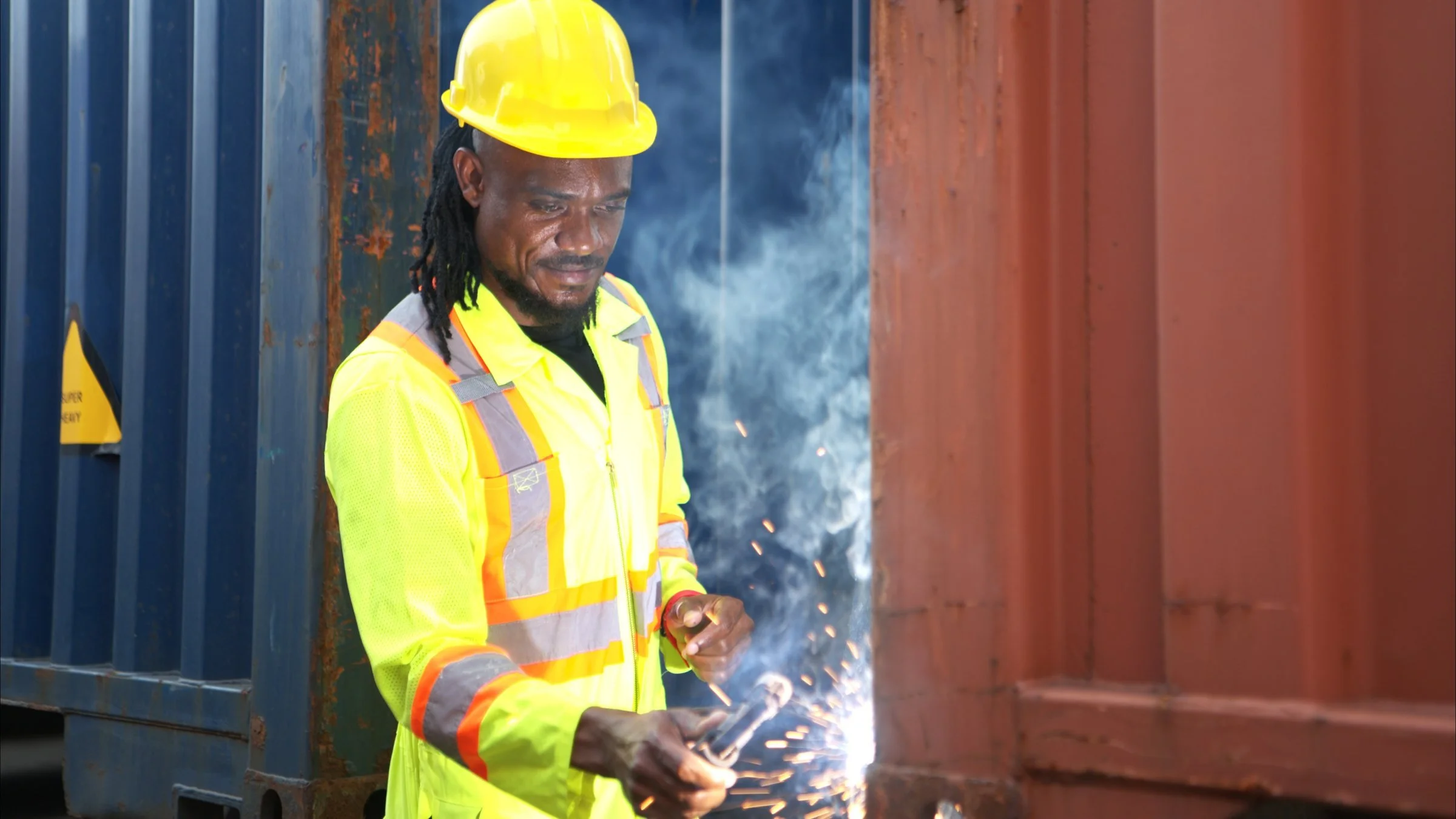
Marine welding repairs during a short stay succeed or fail on the preparation: a clear scope, a safe place to work, the right permit, and enough time for a test and, where needed, a surveyor. A crack, a wasted pipe, a wasted clamp or a steel modification that looks small on an email can absorb the whole call if the metal has to be landed, if the space is not gas-free, or if class has to attend and has not been told.
This article is a practical guide for superintendents, chief engineers and masters planning welding in The Bahamas or South Florida. It covers what to send, how to decide whether the job belongs on board or in a workshop, and the hot-work controls that have to be in place before an arc is struck. It does not invent welder qualifications, procedure specifications or prices, and it is not a welding procedure.
Planning marine welding repairs before the ship is alongside
The first useful message describes the job in enough detail for someone to decide how it can be done. “Weld a pipe in the engine room” is not a scope. The system, the material if you know it, the location, the access, and whether the pipe can be isolated, landed, or must be welded in place, are a scope. Photographs and a simple sketch help. If class, the flag or a charterer has already been notified, or if a particular procedure will be required, say so at the start.
Send, as early as you can:
- The vessel name, ETA, berth or anchorage, and a 24-hour technical contact
- The defect or the intended modification, the system, and the location
- Material, thickness or schedule if you have them, and any drawings or part numbers
- Whether the work is structural, pipework, or a smaller workshop job
- Whether a surveyor should attend, and any condition already imposed
- The time the ship can actually make the work area available, including isolation
Marine Technical Services at Russmill Maritime Services includes onboard and workshop repairs and welding. Send the job through the technical contact form, or with a wider enquiry through request a quote. Quote requests are answered within 12 to 24 hours. For urgent vessel needs, call +1 242 821 7780. Office hours are Monday to Friday, 9:00 am to 5:30 pm.
Decide early whether the work can be done safely on board, or whether a piece should be landed to a workshop. Landing needs time, lifting arrangements and a plan to get the item back before sailing. Onboard work needs a space that can be made safe for hot work, and a period when the ship can keep it that way.
Hot work, isolation and time alongside
Welding on a ship is hot work. It should not start until the ship's permit-to-work is in place, the space is in an acceptable condition, a fire watch has been agreed, and a responsible ship's officer is named. Combustible materials, coatings, lagging, and openings into adjacent spaces all have to be considered. Gas-free or other atmospheric conditions, where they are required, should be confirmed by the ship's own procedures and by competent testing, not assumed because the space “looks clean.” Isolation of the system being welded, and of nearby services that could be damaged or could make the work unsafe, is part of the same preparation.
A fire watch is not a person standing somewhere in the same compartment with an extinguisher in their hand as an afterthought. It is an agreed arrangement for the work, including a period after the work if the ship's procedures require it. The attending technicians should work under the ship's permit, not around it.
Time alongside should include preparation, the weld itself, cooling and inspection, and any test the ship or a surveyor will require. If the stay is short, say so. A defined workshop job on a landed piece may fit a short window better than an undefined repair in a space that has not yet been isolated.
After the work
Walk the job with the attending welder or engineer before sailing: what was done, what consumables or pieces were used, what tests were completed, and what was left outstanding. Keep the report, any certificates, and photographs the superintendent will want. If a temporary repair was the only safe option in the time available, that should be written down, with a recommendation for permanent work at the next opportunity.
Frequently asked questions
Can most welding be done on board at berth? Many jobs can, if isolation, permits, fire protection and access are in place and the port allows the work. Some jobs need a workshop, a longer window, or conditions the berth cannot provide. That should be decided from the information you send, not assumed.
Do we need a qualified procedure and a surveyor for every weld? Not every job. If the work affects a class or statutory item, or if a procedure has already been specified, say so early so attendance and any required documentation can be planned with the repair.
What if the stay is only a few hours? Send the scope and photographs as soon as the need is known. A short call can take a defined, well-prepared job, especially if a piece can be landed. An undefined defect in a space that is not yet isolated usually cannot.
Send the scope before the ship is in range
If you already have welding on the list for the next Bahamas or South Florida call, send the scope through the technical contact form or email ops@russmillmaritime.com. We will respond within 12 to 24 hours with a plan that fits the time alongside.