
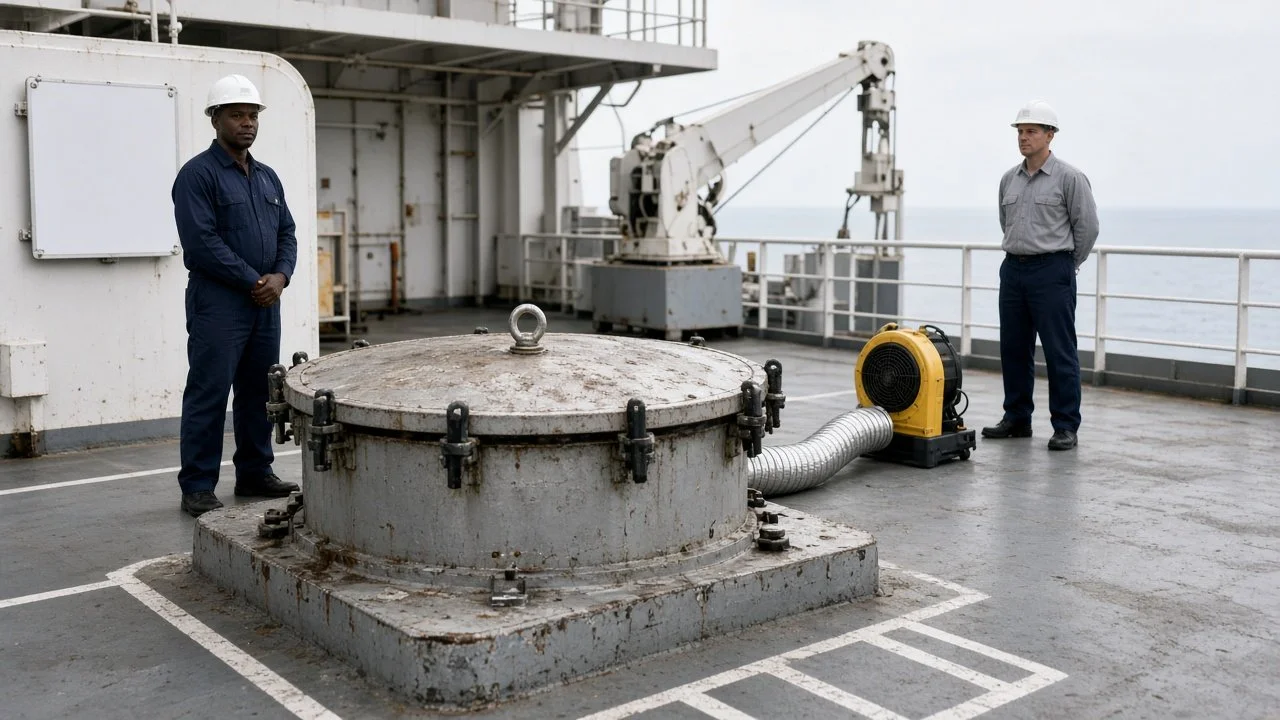
Enclosed space entry ships cannot treat as a routine walk into a tank, a cofferdam, a chain locker, a duct, or a poorly ventilated compartment behind a door. The atmosphere in those spaces can be oxygen-deficient, flammable or toxic, and it can change after the first test. People are still harmed, and still killed, in spaces that were thought to be safe. This article does not cite incident statistics, and it is not a procedure. No one should enter an enclosed space on the strength of a briefing in a trade journal.
What follows is a practical industry note for operators, designated persons, masters and safety officers. It points to the current official sources, and to the arrangements a ship should already have, so that the company's own system is the thing people use.
What enclosed space entry ships should already have in place
The current IMO recommendations are in resolution MSC.581(110), Revised recommendations for entering enclosed spaces aboard ships, adopted on 27 June 2025. That resolution invited the Assembly to revoke the earlier recommendations in A.1050(27), and the earlier resolution has been revoked. The working document for the company and the ship is the current text, together with the flag's instructions and the safety management system required by the ISM Code. National requirements may differ in detail from the IMO recommendations, including on atmospheric criteria. Those details should be read in the official texts, not copied from this article as a checklist.
In outline, a working arrangement usually includes:
- A means of identifying the enclosed spaces on the ship, including, under the current recommendations, a ship-specific enclosed space register.
- A risk assessment for the space and the work, before anyone enters.
- A permit-to-work, or the equivalent control in the company's system, and a responsible person in charge of the entry.
- Ventilation, and enough time for it to be effective, before entry is considered.
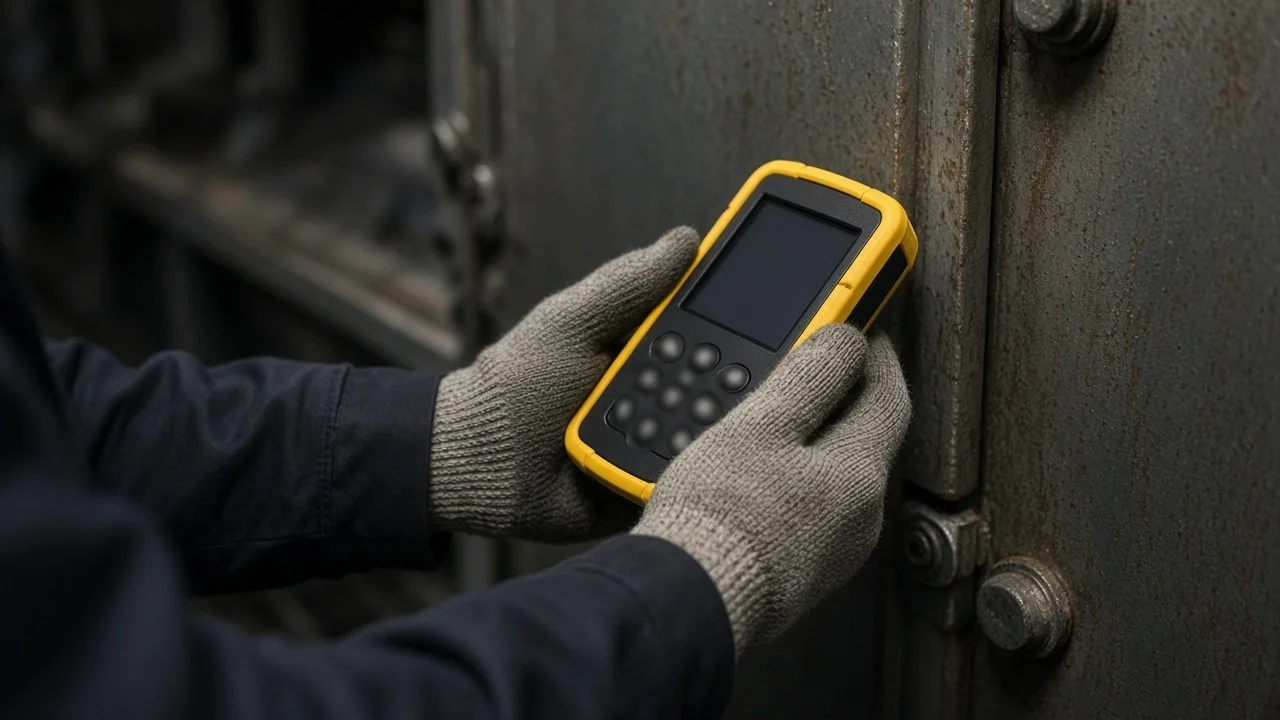
- Atmosphere testing with properly calibrated instruments, by people trained to use them, before entry and at regular intervals until the work is finished, at enough levels and locations to be representative.
- An attendant at the entrance, communication with those inside, and a rescue plan that does not consist of other people rushing in unprotected.
- Drills, and equipment that is actually ready, not only listed.
SOLAS already sets two particular duties that sit beside those recommendations. Regulation III/19 requires enclosed space entry and rescue drills, at intervals not exceeding two months, for seafarers with entry or rescue responsibilities, covering personal protective equipment, communications, atmosphere-testing instruments, rescue procedures, and first aid and resuscitation. Regulation XI-1/7 requires ships to carry portable atmosphere-testing instruments for enclosed spaces. Maker's instructions for those instruments, including calibration, should be followed. Current IMO recommendations and related circulars address testing and equipment in more detail and should be read in their current form.
Why a familiar space is still a risk
A space that was entered last week is not safe this week because the last entry was uneventful. Residues, leakage, rust, fire-extinguishing gas, refrigerants, fumigants, and the simple consumption of oxygen by rust or decaying material can all change an atmosphere. Adjacent spaces can be affected. A first reading taken at the top of a hatch can be unrepresentative of the bottom of a ladder. Smell, a clear visual impression, or the fact that a space is entered often, is not a test. The instruments, and the criteria in the current official guidance and the company's procedure, are what decide whether an entry may be considered at all. If those conditions cannot be met, the work should be postponed or redesigned, not forced through.
The other recurring failure is the rescue. A person who collapses in an enclosed space is an emergency for the ship's planned rescue arrangements, not a signal for the nearest colleague to go in after them. The drill required by SOLAS is intended to make that distinction real.
If work in an enclosed space is planned during a port call in The Bahamas or South Florida, it remains the ship's and the company's responsibility. Attending contractors should work under the ship's permit and the company's procedures, not around them. Marine Technical Services may be involved when repairs or tank work are part of the call; that does not reduce the entry controls. The FAQs set out the usual information to send for a call; they are not an enclosed-space procedure.
Frequently asked questions
Can we use this article as the ship's enclosed-space procedure? No. Use the current IMO recommendations, the flag's instructions, and the company's safety management system. This briefing is not a permit, not a test method, and not a rescue plan.
Which IMO text should we be following in 2026? Resolution MSC.581(110), adopted on 27 June 2025, contains the current recommendations. The earlier recommendations in A.1050(27) have been revoked. Confirm any later amendment, and any flag circular, from official sources.
How often must enclosed-space drills be held? SOLAS regulation III/19 requires enclosed space entry and rescue drills at intervals not exceeding two months, for seafarers with those responsibilities. The drill content is set out in that regulation and should be followed as written.
A short closing note
This is an industry briefing, not a procedure and not a substitute for training. Russmill Maritime Services Limited is a ship supplier, service provider and port agent in The Bahamas and South Florida. For questions about an upcoming call, email ops@russmillmaritime.com or call +1 242 821 7780.