SOLAS IMO amendments are often spoken of as if “adopted” and “in force” were the same thing. They are not. A draft in a working group, a text approved by a sub-committee, a resolution adopted by the Maritime Safety Committee, and a regulation that has actually entered into force are different stages. Treating the first as if it were the last is how a ship ends up preparing for a rule that does not yet apply, or missing one that already does.
This article is a practical briefing for operators, designated persons and masters. It explains how to read a SOLAS or related IMO amendment, and where to confirm what applies to a given ship. It does not catalogue 2026 rule changes, and it does not treat proposals as law. The official source is the current convention text, the amending resolution, and the flag's instructions.
How SOLAS IMO amendments usually become binding
The International Convention for the Safety of Life at Sea, 1974, as amended, is the standing safety convention. Most technical amendments are made to its Annex, other than Chapter I, under article VIII. In outline, a proposed amendment is circulated, considered by the Maritime Safety Committee, and adopted by a two-thirds majority of Contracting Governments present and voting in the expanded Committee, with at least one-third of Contracting Governments present.
For those Annex amendments, SOLAS uses tacit acceptance. The amending resolution states a date on which the amendments are deemed to have been accepted, unless, before that date, more than one third of Contracting Governments, or Contracting Governments whose combined fleets are not less than 50 per cent of world merchant gross tonnage, have notified objections. After deemed acceptance, the amendments enter into force on a later date also stated in the resolution, commonly six months after the acceptance date. The Convention allows the acceptance period to be set differently, with a minimum of one year, so the dates in the particular resolution are the ones that matter.
The Committee has also worked, as a matter of practice, to a longer, regular cycle for the entry into force of many SOLAS and related mandatory amendments, with exceptional shorter periods where they are justified. That cycle is guidance on timing. It does not replace the acceptance and entry-into-force dates in the resolution itself.
Related mandatory codes — the LSA Code, the FSS Code, and others made mandatory under SOLAS — are often amended on a similar path. Circulars and guidelines may be important, but they are not automatically the same thing as an in-force amendment. Read the instrument for what it is.
How to read a change, and what to do with it
When a class society, a trade note or a supplier mentions a “new SOLAS rule,” the useful questions are simple:
- Has the text been adopted, or is it still a draft, a correspondence-group paper, or a committee discussion?
- If it has been adopted, what are the deemed-acceptance and entry-into-force dates in the resolution?
- Does it apply to this ship, this type, this date of construction or this conversion, or only to ships built after a specified date?
- Has the flag issued its own implementation instructions, exemptions or equivalent arrangements?
Until those answers are taken from official texts, the item should not be written into the ship's certificates or the SMS as if it were already mandatory. Conversely, a rule that has already entered into force should not be deferred because a later package is still under discussion. Applicability is often where summaries go wrong. An amendment may apply only to ships constructed on or after a stated date, or to certain ship types, or to equipment installed after a stated date, or it may also reach existing ships at a later survey or by a final date. Those distinctions live in the amending text. A rule that applies only to new ships should not be forced onto an older ship, and a rule that does reach existing ships should not be ignored because the keel was laid years earlier.
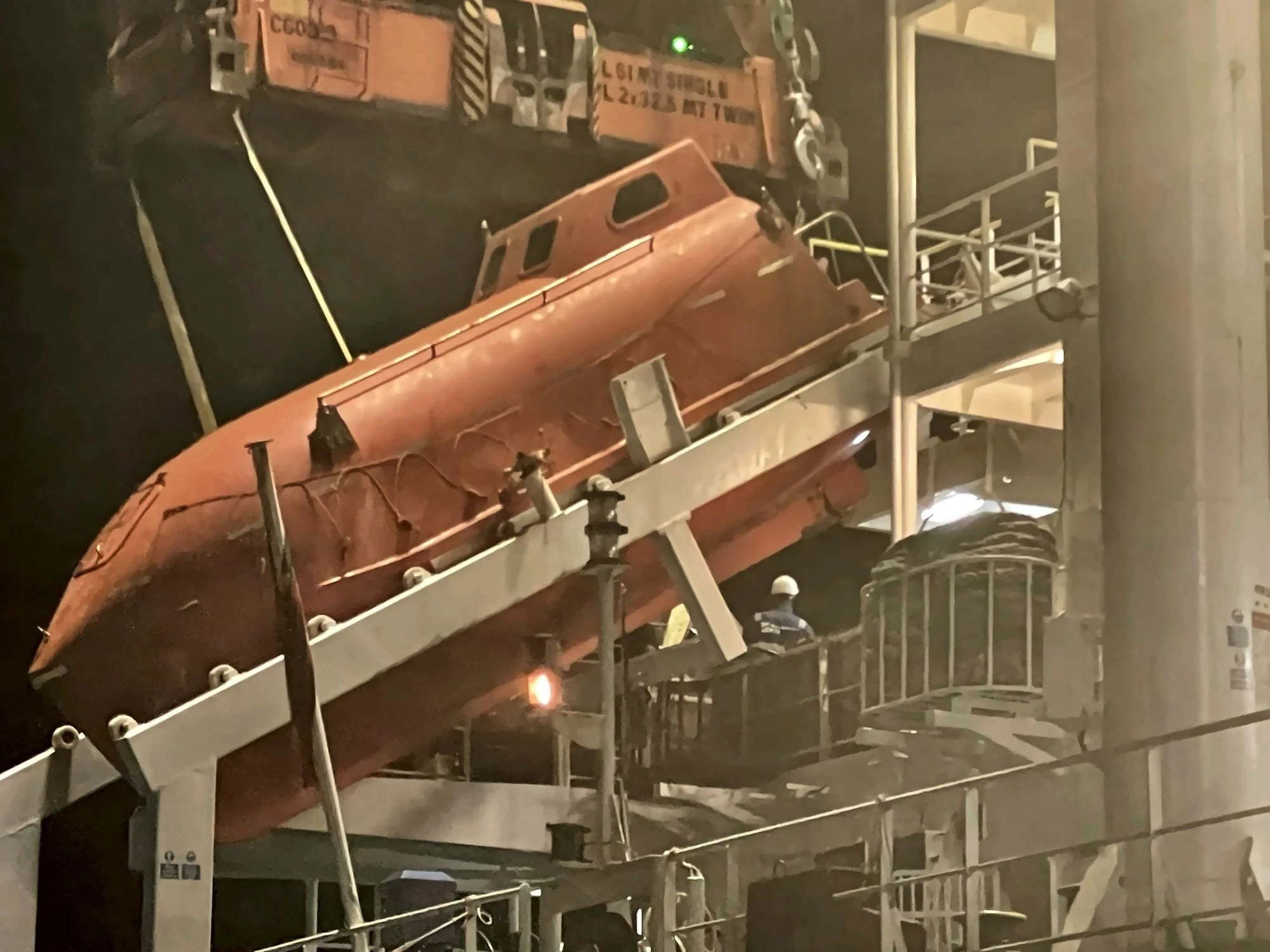
Some changes affect equipment and servicing — life-saving appliances, fire systems, radio — and have to be planned around a port call. LSE Servicing & Support is relevant when that work is to be done in The Bahamas or South Florida, but it does not decide which amendment applies. The FAQs set out the usual information to send with a call.
Frequently asked questions
If an amendment has been adopted, does it already apply to the ship? Not necessarily. Adoption is followed by an acceptance period and an entry-into-force date, both stated in the resolution. Confirm those dates, and the ship's applicability, from the official text and the flag.
Can we rely on a trade summary instead of the resolution? A summary can be a useful alert. It is not the source. Read the resolution, the consolidated convention text, and any flag circular before changing a procedure or a purchase list.
Do all IMO instruments follow the same timetable? No. SOLAS article VIII sets the process for SOLAS amendments. Other conventions have their own procedures. Some codes have their own agreed amendment cycles. Take the dates from the instrument in front of you.
A short closing note
This is an industry briefing on how to read a rule change, not a list of current amendments and not legal advice. Russmill Maritime Services Limited is a ship supplier, service provider and port agent in The Bahamas and South Florida. For questions about an upcoming call, email ops@russmillmaritime.com or call +1 242 821 7780.