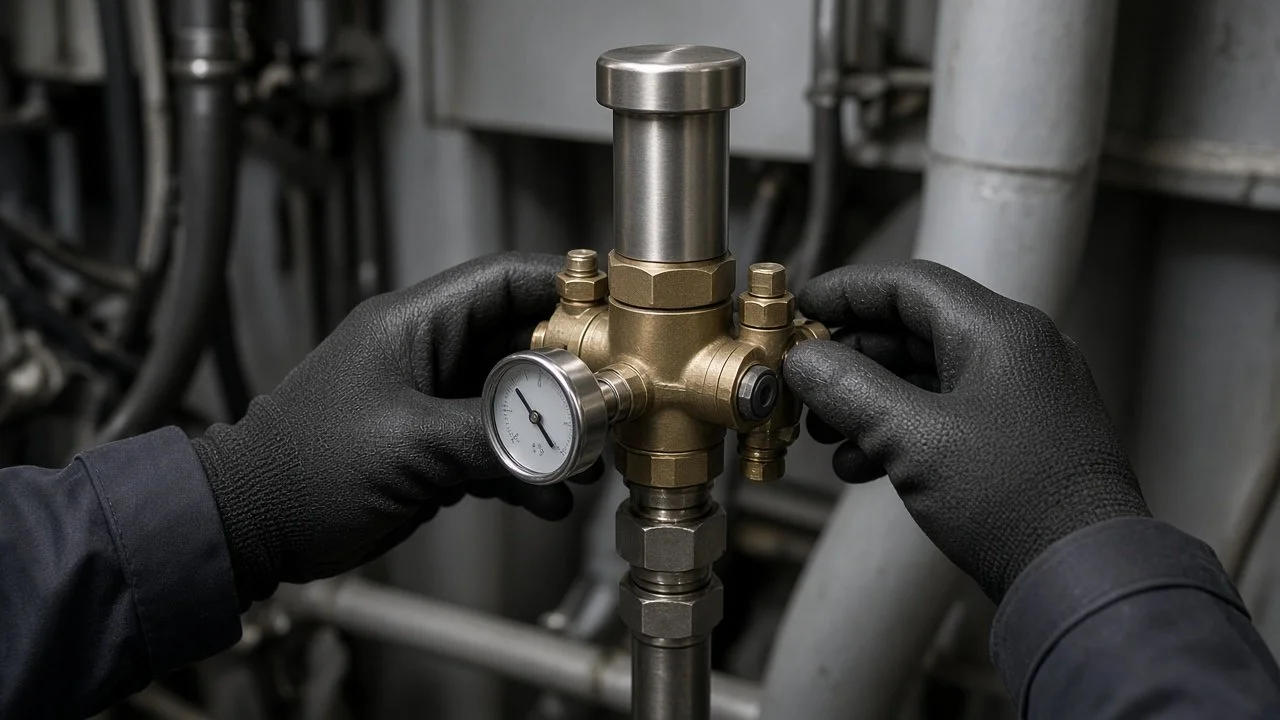
Ship fire system servicing is easy to treat as a single due date on a certificate, until the work is opened up and found to include more than a visual check. A fixed carbon dioxide, foam, water-mist, dry-powder or sprinkler system, and the breathing apparatus that goes with the ship's fire outfit, each have their own inspection, test and maintenance needs. Those needs are set by SOLAS Chapter II-2, the International Code for Fire Safety Systems, the maker, the flag and the ship's approved maintenance plan. They are not the same interval for every system, and they are not restated here as if they were.
This article is a practical guide for safety officers, chief engineers and superintendents planning the work during a call in The Bahamas or South Florida. It explains what to send, how to plan a short stay, and what to check before sailing. It does not invent a single hydrostatic or shore-servicing period for every cylinder and every plant.
What ship fire system servicing usually includes
The useful starting point is an inventory, not a generic request to “service the fire system.” That inventory should include:
- The type of each fixed system, the spaces it protects, and the maker if you know it
- The last service, inspection or test date, and the next due date in the ship's plan
- The number of cylinders, bottles or tanks, and whether any are due for weighing, contents checks, or shore-based work such as hydrostatic testing
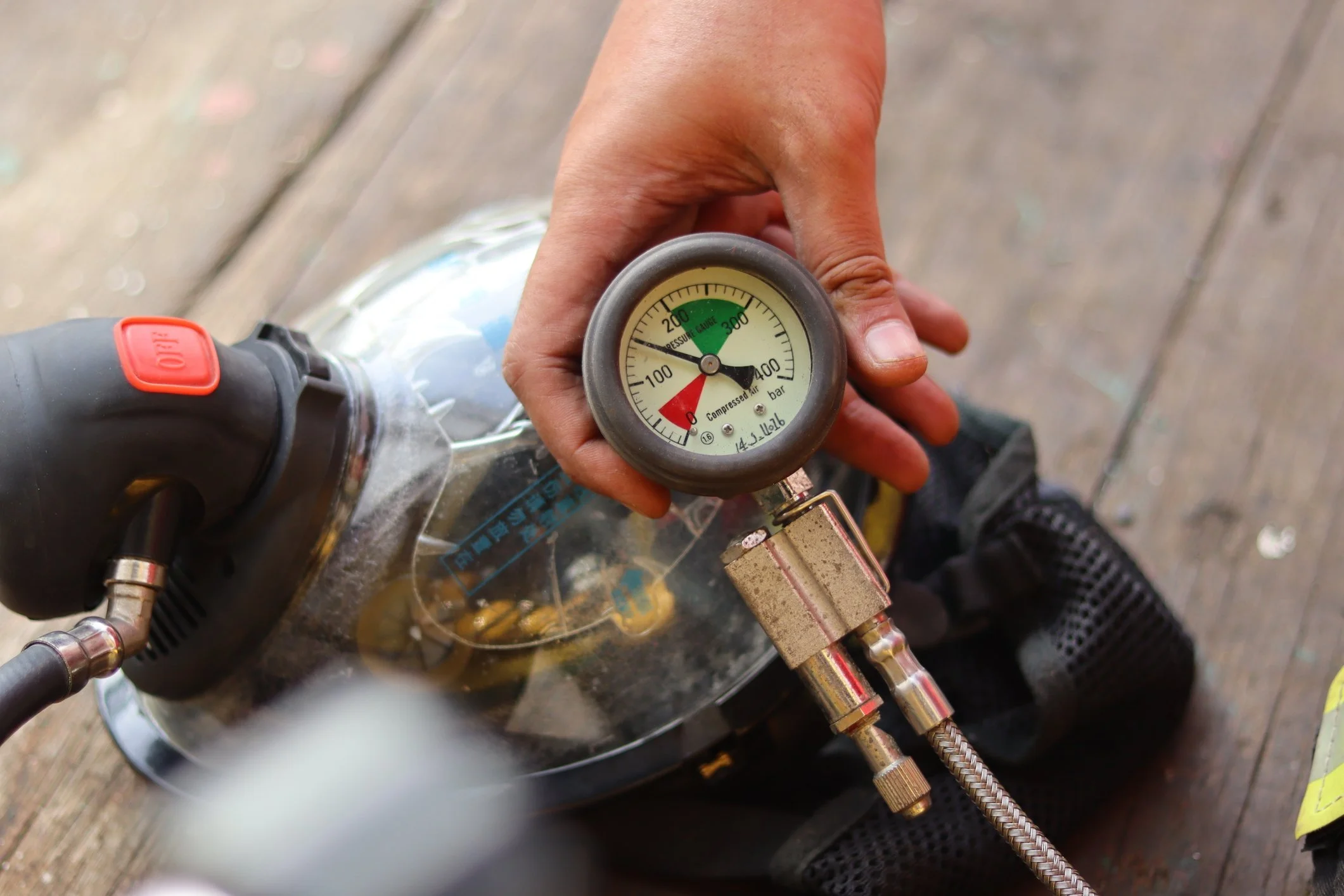
- Breathing-apparatus sets, spare cylinders, and any related equipment due in the same window
- Whether distribution pipework, nozzles, alarms, release stations or doors will also need attention
- Any outstanding deficiency or class condition
LSE Servicing & Support at Russmill Maritime Services includes fixed fire systems, breathing apparatus and hydrostatic testing, alongside the wider LSA and FFE work. Send the list through the LSE/FFE contact form. If pipework, steelwork or other repairs have to be done at the same time, say so, so that Marine Technical Services can be planned with the service, not after the plant has been opened.
Shore-based work and onboard work should be distinguished early. An inspection or a contents check may be possible on board during a short stay. A cylinder that has to go ashore, or a system that has to be isolated for a longer test, needs enough time, and a plan for what remains available to the ship until the equipment is back in place. That plan belongs in the first message, not at the gangway. If several systems or a large number of breathing-apparatus cylinders fall due together, say so. It may be possible to stage the work so that the ship is never without an agreed minimum of equipment, provided that is planned before arrival rather than improvised once the team is already on board. Portable extinguishers due in the same window can often be included on the same list, which saves a second attendance later in the year.
Isolations, time alongside and the report
A fixed fire system should not be taken out of service without a clear, temporary arrangement that the master and the ship's safety officer have accepted, and that any flag or terminal requirement has been considered. Breathing apparatus used for fire or for other shipboard duties should not all be landed at once unless the ship has agreed how it will manage in the meantime.
Send the vessel name, ETA, berth and a 24-hour contact with the inventory. Quote requests are answered within 12 to 24 hours. For urgent vessel needs, call +1 242 821 7780. Office hours are Monday to Friday, 9:00 am to 5:30 pm. If the stay is short, say which items are essential before sailing and which can be planned for a later call.
The ship's own weekly or monthly checks do not replace the servicing and testing required under the maintenance plan, and a shore attendance does not replace the crew's familiarity with the release procedure. Both have to be in place. After the work, check the report against the equipment actually on board: serial numbers, test results, next due dates, and any cylinders or parts that were replaced or landed. Confirm that a system which was isolated has been correctly reinstated, and that the crew who may have to operate it know that it is back in service. Keep the certificates with the ship's fire file.
Frequently asked questions
Is there one interval for all fixed fire systems and all BA cylinders? No. Intervals depend on the system type, the maker, the flag, class and the ship's approved maintenance plan. Send the due dates you have, and do not apply a remembered figure from another plant.
Can the work always be finished on a short call? Not always. Onboard inspections may fit a short window. Shore-based testing or a repair to pipework may not, unless it is planned early and, where needed, an exchange or a temporary arrangement is agreed.
Do we need a surveyor to attend? Not for every service. If class, the flag or an outstanding condition requires attendance, say so in the first message so the surveyor and the work can be booked for the same window.
Send the system list with the first enquiry
If you already know which fixed fire systems or breathing apparatus fall due on the next Bahamas or South Florida call, send the list through the LSE/FFE contact form or email ops@russmillmaritime.com. We will respond within 12 to 24 hours with a plan that fits the call.