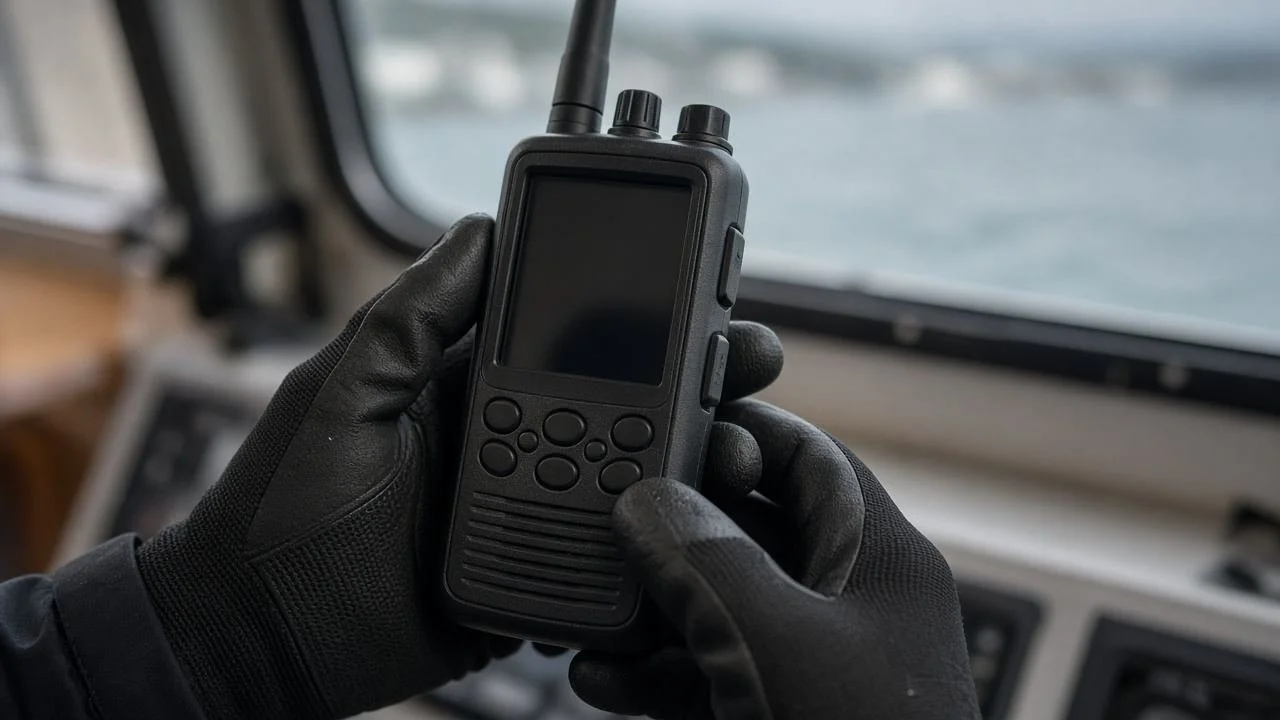


GMDSS distress alerting is the ship's first duty when the ship, or a person in distress, needs help: to get a clear, recognised distress message to a shore authority and to ships in the vicinity, by the methods the Global Maritime Distress and Safety System provides. Informal telephone calls, social media, and a hope that someone is already watching, are not the primary method. SOLAS Chapter IV sets the carriage and watchkeeping framework for ships that fall under those provisions. The detail should be taken from the current text, the ship's radio licence and the GMDSS documents, not from a remembered list of old brands or old sea-area definitions.
This article is a plain-English briefing for masters, radio officers and operators. It is not a radio procedure and not a substitute for the ITU Radio Regulations or for the ship's radio checklist. It does not invent watchkeeping shortcuts.
What GMDSS distress alerting uses, and where
The system is built around sea areas, which describe the radio coverage in which the ship is operating, and therefore the equipment it must be fitted to use.
- Sea Area A1 is the area within radiotelephone coverage of at least one VHF coast station in which continuous digital selective calling alerting is available.
- Sea Area A2 is the area, excluding Sea Area A1, within radiotelephone coverage of at least one MF coast station in which continuous DSC alerting is available.
- Sea Area A3 is the area, excluding Sea Areas A1 and A2, within the coverage of a recognised mobile satellite service supported by a ship earth station in which continuous alerting is available.
- Sea Area A4 is the remaining sea area outside A1, A2 and A3.
The important wording for satellite services is “recognised mobile satellite services,” not a single historic provider. Ships should be fitted and maintained for the services they are actually approved and commissioned to use, and for the sea areas of the intended voyage. A change of route, or of the ship's fitted services, should be checked against the radio certificate and the operator's qualifications.
In a distress, the usual methods include digital selective calling, distress voice on the appropriate distress frequencies, and a 406 MHz EPIRB. Search and rescue transponders, and the other GMDSS equipment the ship carries, belong in the same picture. The ship's procedures should say who may initiate a distress alert, how a false alert is cancelled, and how a continuous watch is kept. Those procedures should be drilled. A distress alert should include, in the format the procedures require, the identity of the ship, the position, the nature of the distress, and the assistance required, and it should be updated if the position or the situation changes. A false alert must be cancelled by the recognised method, not ignored in the hope that it will be obvious it was a mistake. Watchkeeping for distress and safety traffic should be maintained as SOLAS Chapter IV and the ship's documents require for the sea areas of the voyage; the exact watchkeeping arrangements should be taken from those sources, not from a shortened list in an article.
Maintenance, documents and a port call
Equipment that is overdue for test or shore-based maintenance is a weakness in the same system. EPIRBs, SARTs and related equipment have their own test and service cycles, which should be taken from the maker, the flag and SOLAS Chapter IV, not from a remembered interval. Registration of a 406 MHz EPIRB must be current. LSE Servicing & Support is relevant when that equipment is to be serviced in The Bahamas or South Florida. The FAQs set out the usual information to send with a call.
A radio licence, operators' certificates, and the ship's GMDSS documents should match the equipment actually installed. If a set has been changed, or a sea-area designation on the certificate no longer matches the ship's trade, that should be raised with the flag and the radio company before the next survey asks the question.
If the ship is in or bound for port and a medical case, a search, or a distress in the vicinity will change the arrival, the agent should be told promptly. That is an addition to GMDSS, not a replacement for it.
Frequently asked questions
Is a mobile telephone an acceptable substitute for GMDSS in a distress? No. Use GMDSS first. A telephone may be useful later, once a co-ordinating authority has been established, but it is not the primary method and should not replace DSC, an EPIRB or distress voice.
Does “Inmarsat” still define Sea Area A3? The current wording is recognised mobile satellite services. Confirm which services the ship is fitted and certified to use, and which sea areas the voyage requires, from the ship's documents and the current SOLAS Chapter IV text.
Who should test the EPIRB? The crew's routine self-test, where the maker provides for one, should be recorded. It does not automatically replace the annual test and any shore-based maintenance required under the ship's maintenance regime. Follow the maker and the flag.
A short closing note
This is an industry briefing, not a radio operating procedure and not official SAR instruction. Russmill Maritime Services Limited is a ship supplier, service provider and port agent in The Bahamas and South Florida. For questions about an upcoming call, or about GMDSS equipment due for service, email ops@russmillmaritime.com or call +1 242 821 7780.