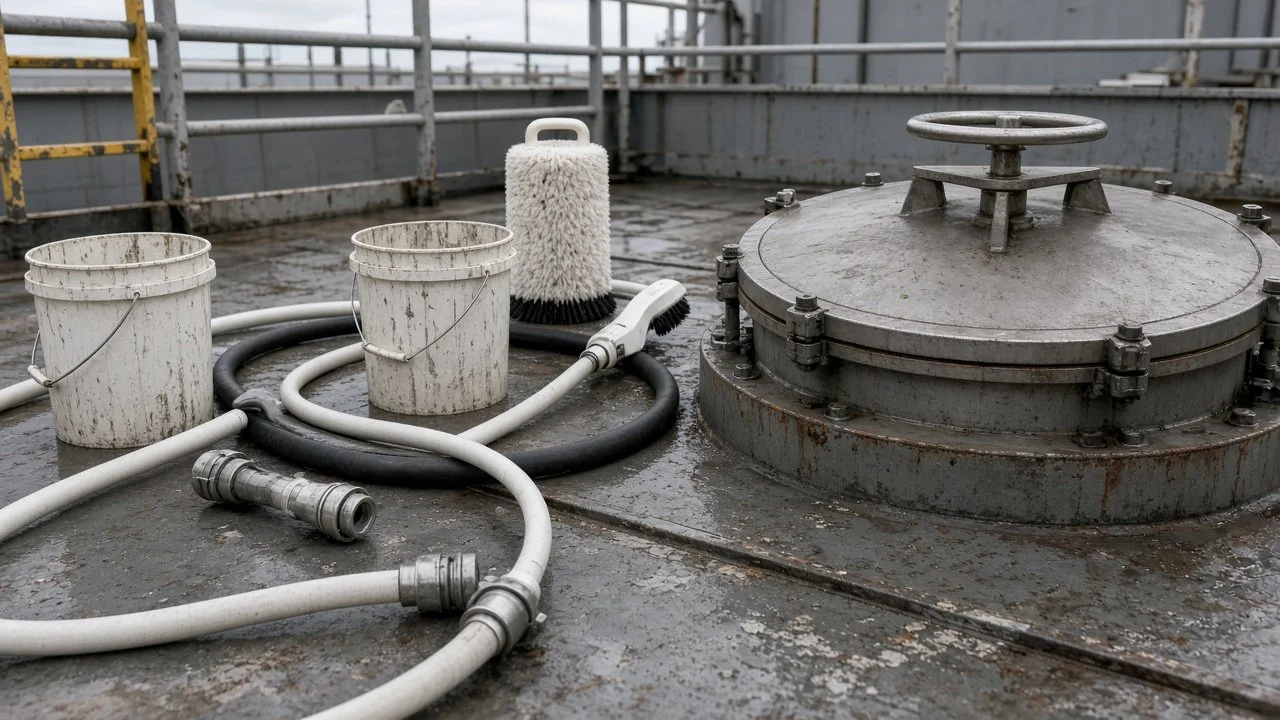

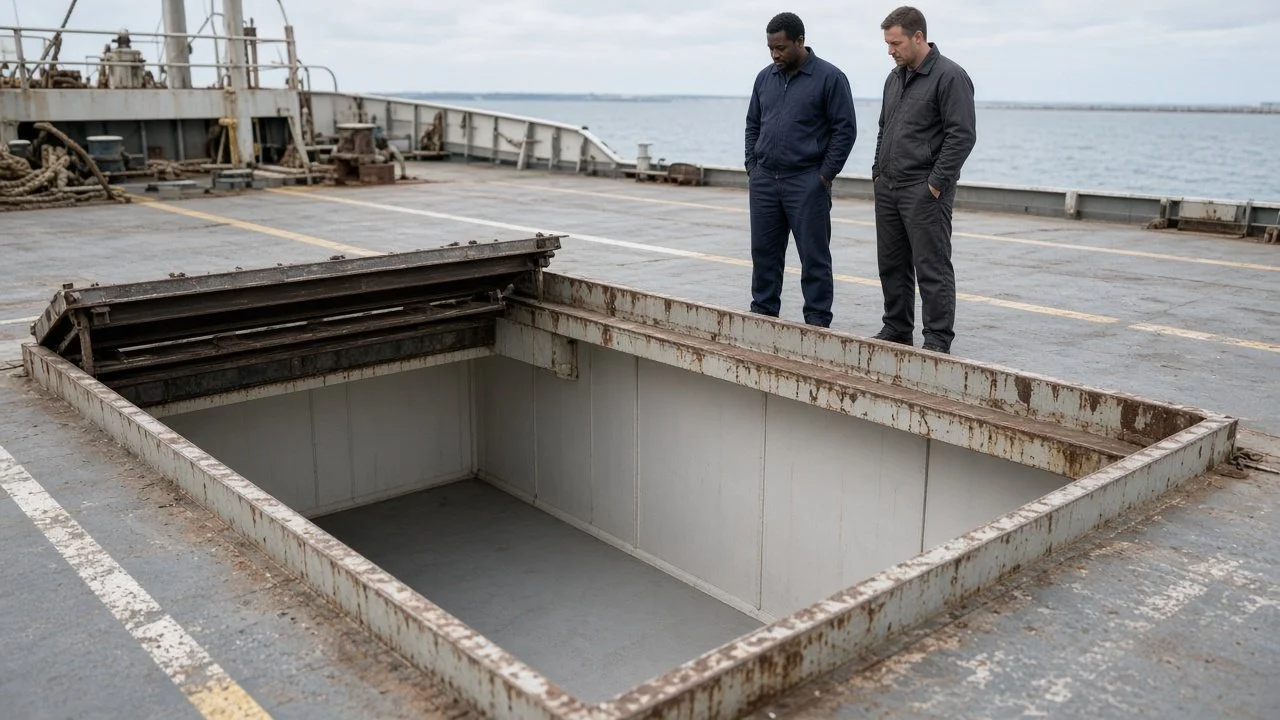
Tank and hold cleaning is easy to describe as a single job between two cargoes, until the last residue, the next specification, the time alongside and the rules on discharge do not fit together. A tank that must be ready for a different grade, or a hold that must be clean, dry and free of previous cargo, will not be put right by a general request to “wash down” sent on the morning of arrival. Entry into tanks and many holds is also enclosed-space work. It should be planned as such, under the company's procedures, and not treated as a routine walk into an empty space.
This article is a practical guide for superintendents, chief officers and masters planning cleaning in The Bahamas or South Florida. It covers what to send, what usually has to be confirmed before work starts, and how to record the result. It does not invent chemical lists, wall-wash criteria, or a discharge rulebook for any particular cargo.
Planning tank and hold cleaning before the ship is alongside
The first useful message names the last cargo, the next cargo, and the standard of cleanliness required, not a general request to clean. Send:
- The vessel name, ETA, berth or anchorage, and a 24-hour contact
- The last cargo, the next intended cargo, and any cleanliness or dryness standard already specified by the charterer, the receiver or the company
- Which tanks or holds are to be cleaned, and whether slops, residues or wash water will need to be landed
- Whether the work is a wash, a chemical clean, drying, or an inspection after cleaning
- Any known residues, damage, or previous failed inspection
- How long the ship will actually be available, including any cargo or survey that will share the window
Marine Technical Services at Russmill Maritime Services includes tank and hold cleaning. Send the job through the technical contact form. Because access, waste reception and the berth often sit with the same call, tell Port Agency & Logistics at the same time.
Discharge of wash water, residues or slops is not automatically permitted in every port or at every berth. MARPOL Annexes, special areas and local conditions all have a bearing, and they should be confirmed for the actual cargo and the actual place of work. The Wider Caribbean is a special area for the purposes of Annex V, which already applies to The Bahamas and the Florida approaches; that does not by itself answer every washing question. Confirm the current official position before anything is put over the side.
Access, safety and the record
A person should not enter a tank or a poorly ventilated hold except under the company's enclosed-space procedures: risk assessment, permit, ventilation, atmosphere testing, an attendant, and a rescue plan. This article is not that procedure. Current IMO recommendations and the ship's SMS are the sources to follow. If the work can be done without entry, that is often the safer request. If entry is required, it must be planned, not improvised because a surveyor is already on the quay.
Cleaning chemicals, if they are used, should be identified in the first message, and used only as the maker, the cargo, and the ship's procedures allow. A product that was used for the last cargo is not automatically acceptable for the next one. Fresh water, drying time and a wall-wash or visual standard, if one has been specified, should be built into the window, not hoped for at the end of the afternoon.
Quote requests are answered within 12 to 24 hours. For urgent vessel needs, call +1 242 821 7780. Office hours are Monday to Friday, 9:00 am to 5:30 pm. If the stay is short, say which tanks or holds are essential before sailing and which can wait.
After the work, the ship should receive a clear record of what was cleaned, to what standard, what residues were landed, and any areas that could not be completed. Photographs help if they are labelled so that a superintendent who was not on board can see which space they show. If a space fails an inspection, that should be written down in time for a further wash or a change of plan before the next cargo is loaded.
Frequently asked questions
Can tank or hold cleaning always be finished on a short call? No. It depends on the last cargo, the standard required, the number of spaces, drying time, and whether residues must be landed. Send the picture early, and be ready to limit the scope if the window is short.
Is entry always required? Not always. Some work can be done with machines or from outside the space. If entry is required, it is enclosed-space work and should be planned under the company's procedures.
Where may wash water be discharged? Only where the applicable MARPOL annex, any special area, and the port's current conditions allow it. Confirm before pumping. Do not rely on a remembered permission from another port or another cargo.
Send the cargo history with the first enquiry
If you already know that tank and hold cleaning is needed on the next Bahamas or South Florida call, send the last cargo, the next cargo and the scope through the technical contact form or email ops@russmillmaritime.com. We will respond within 12 to 24 hours with a plan that fits the call and the port's conditions.