

ISPS port security is the interface between the ship and the port, not only a certificate in a folder. The International Ship and Port Facility Security Code, made mandatory under SOLAS Chapter XI-2 for ships and port facilities that fall within its scope, sets out how ship and shore are to work at three security levels, and what each side should already have in place. This article is a practical briefing for masters, ship security officers and operators. It does not quote a current security level for The Bahamas, Port Everglades or the Port of Miami, because that level should be confirmed at the time of the call from official sources, not from a trade article.
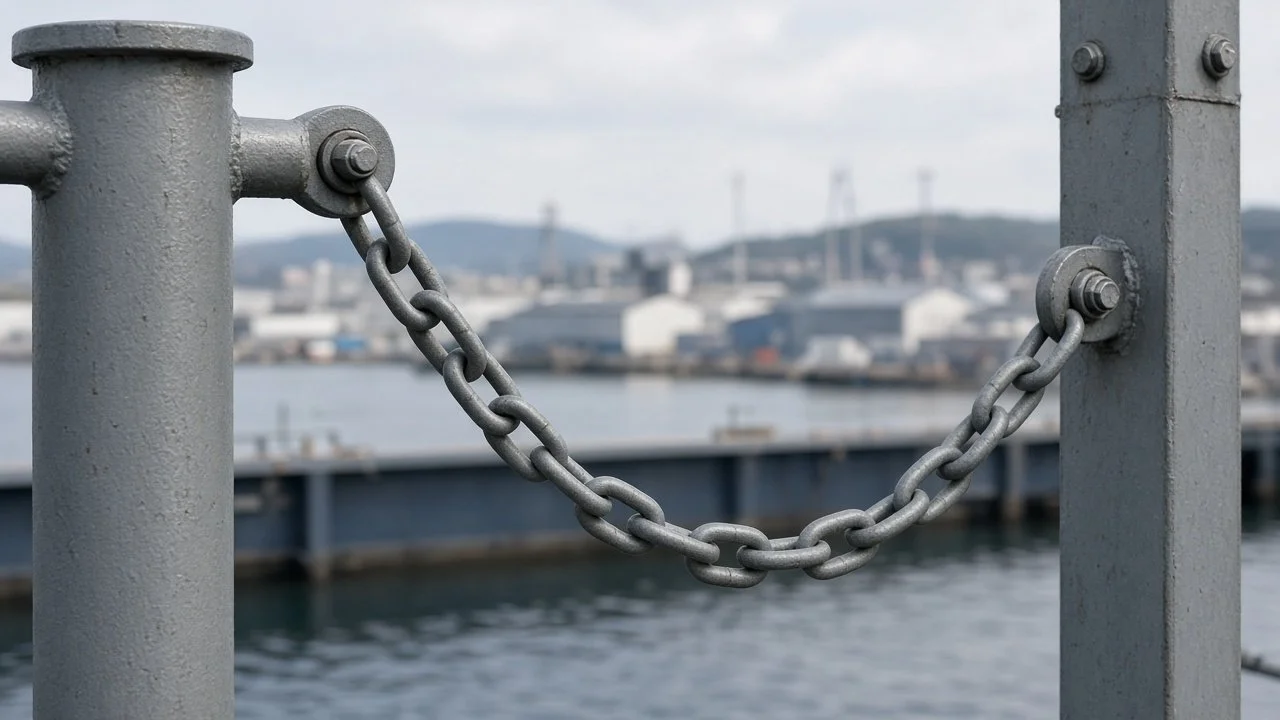
The photographs are present-day illustrations of access control. They should not be read as a named port.
What ISPS port security looks like at the gangway
The Code works at three security levels. Security level 1 is the level at which minimum appropriate protective security measures are maintained at all times. Security level 2 is the level at which additional appropriate protective security measures are maintained for a period of time as a result of a heightened risk of a security incident. Security level 3 is the level at which further specific protective security measures are maintained for a limited period of time when a security incident is probable or imminent, although it may not be possible to identify the specific target. The ship should already know, from official information, the level that applies to the ship and the level that applies to the port facility it is about to enter, and should act under its approved ship security plan.
At the ship-port interface, the ordinary expectations are familiar even if the detail changes with the level:
- A ship security officer, and a port facility security officer, who can be identified and contacted
- Control of access to the ship, including visitors, stores, stores vehicles and contractors
- Restricted areas on board, and a clear understanding of who may enter them
- A declaration of security, when the Code or the plan requires one, particularly if ship and shore are operating at different levels, or in other cases the plan provides for
- Screening or inspection of people, baggage and stores as the level and the plans require
- A record of the measures taken, as the plan requires
None of this is a reason to be uncivil, and none of it is a reason to set the plan aside because the stay is short or the visitor is well known. A delivery of stores, a crew change, or a technician attending for repairs is still an access event. People leaving the ship, including crew going ashore or joining a launch, belong in the same control. The FAQs set out the usual pre-arrival information for a call; if extra people or vehicles will need access, that is worth saying early so that Port Agency & Logistics and the terminal are not surprised at the gate. If the ship will need stores, spares or a service technician during the stay, include names, companies and expected times in the first message, rather than adding them after the gangway watch has already been set.
Pre-arrival information, and what not to assume
The ship should arrive with its International Ship Security Certificate, its plan, and a ship security officer who can work with the port facility. Pre-arrival security information, where it is required, should be sent in the form and at the time the flag, the port or the coastal state requires. The agent can help to pass that information; the agent cannot invent a level or waive a control.
Do not assume that the level at the last port is still the level at the next one, or that a familiar terminal has the same arrangements it had a year ago. Confirm the current official position as the ship approaches. If the level changes while the ship is in port, the plan should already say how the ship will respond.
Contractors and suppliers attending the ship should be told, in good time, what identity documents, lists and time windows the port and the ship will require. A crate at the gate without a delivery name, or a technician without identification, is a delay as well as a security problem. If a declaration of security is to be completed, the ship security officer should have the current plan and the right contacts ready, so that the document is not being assembled after the cargo or the stores have already started to move. Records of access, of security communications, and of any additional measures taken, should be kept as the plan requires, in a form that a later inspection can still read.
Frequently asked questions
Can this article tell us the current security level at Freeport or Port Everglades? No. Confirm the level from official sources at the time of the call. A published article cannot be used as a current level.
When is a declaration of security required? When the ship's plan, the port facility's plan, or the circumstances provided for in the Code require one, including where ship and shore are at different levels. Confirm from the plan and from the port facility, not from a remembered example.
Does a short stores delivery still need access control? Yes. The stay may be short; the interface is still an interface. Tell the agent and the ship security officer who is coming, and when.
A short closing note
This is an industry briefing, not a ship security plan and not a statement of any port's current level. Russmill Maritime Services Limited is a ship supplier, service provider and port agent in The Bahamas and South Florida. For questions about an upcoming call, email ops@russmillmaritime.com or call +1 242 821 7780.