
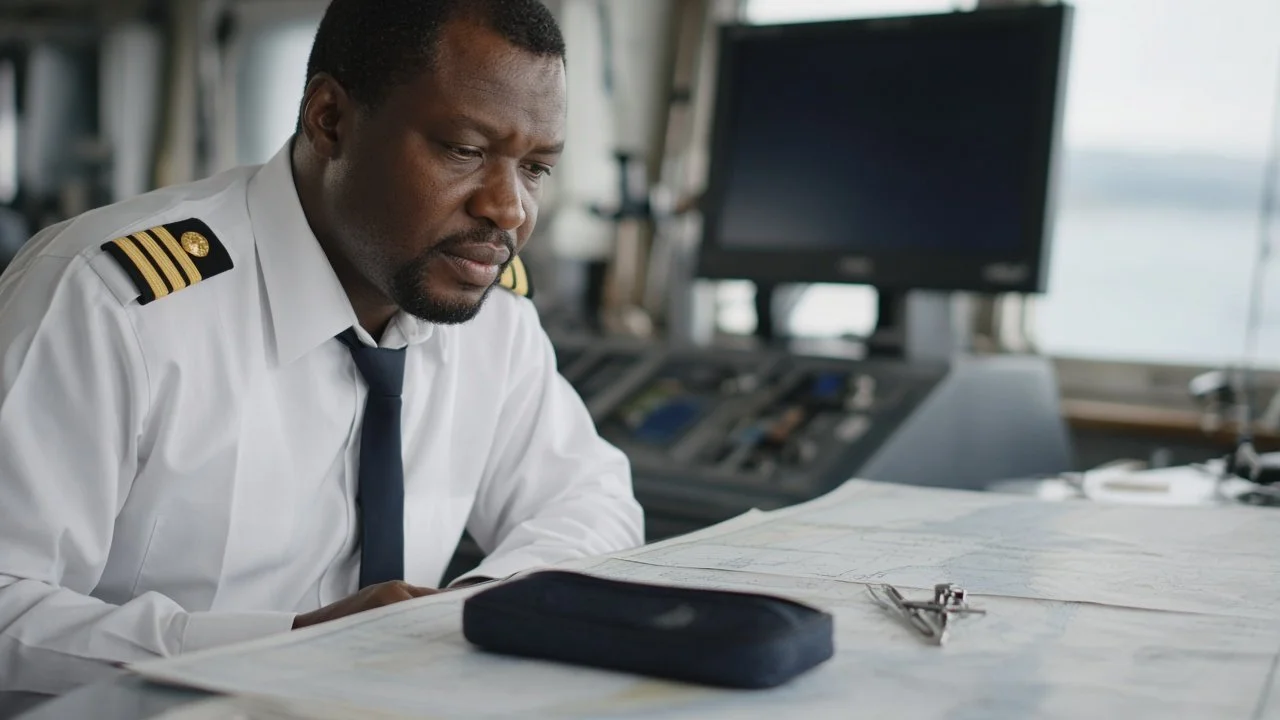
Nautical charts supply is only useful if the charts and publications the ship carries are the official ones required for the voyage, and if they are kept corrected. SOLAS Chapter V requires ships to carry adequate and up-to-date official charts and nautical publications for the intended voyage, whether in paper form, as official electronic chart display and information system data, or as otherwise accepted for the ship. A folio that was complete last year, or an ENC base that has not been updated, is not a passage plan.
This article is a practical guide for masters, navigating officers and purchasing officers ordering charts and publications for a call in The Bahamas or South Florida. It explains what to send and how to think about paper and digital supply. It does not invent a carriage list for any voyage, and it does not claim that a particular chart is in stock.
Planning nautical charts supply before the ship is alongside
The first useful message is a list, or a clear description of the voyage, not a general request for “the Bahamas charts.” Send:
- The vessel name, ETA, port or berth, and a 24-hour contact
- Whether the need is paper charts, official electronic charts, or nautical publications, or a mix
- The current folio or permit list if you have one, including edition or update status if known
- The intended voyage or the area to be covered, if the list is still being built
- Whether the ship uses British Admiralty, NOAA or other official series already carried
- How short the window is, and whether the items must be on board before departure
Ship Supply at Russmill Maritime Services includes British Admiralty and NOAA charts, and related publications. Send the list through the ship supply contact form, or with a wider enquiry through request a quote. Quote requests are answered within 12 to 24 hours. For urgent vessel needs, call +1 242 821 7780. Office hours are Monday to Friday, 9:00 am to 5:30 pm. Stock and lead times are not assumed. Official products sometimes have to be obtained to order, especially if a new edition has just been published or if a permit must be arranged.
Paper charts have to be corrected from official notices, or replaced by a new edition, as the ship's system requires. Official electronic charts have to be kept updated through the official update service the ship is using. A print-out, a photograph of a chart, or an unofficial file is not a substitute for the official product. Temporary and preliminary notices, and other official updates that affect a chart already on board, should be applied or brought to the navigating officer's attention in the way the ship's system requires, not left in an unread envelope. Sailing directions, lists of lights, tide tables and other publications required for the voyage belong on the same list; they also go out of date. If a new edition has been published, confirm whether the previous edition may still be used, and until when, from official information, not from habit.
Receiving the order, and keeping it current
When charts or permits are delivered, check the numbers, the editions and the permits against the order before the ship sails. For paper, confirm that the correction status is as ordered, and that the navigating officer knows which sheets have been added or replaced. For electronic charts, confirm that the permit or licence covers the intended area and period, and that the update process is in the hands of someone who will actually run it.
A single call is not the end of the duty. The folio should be reviewed when the voyage changes, when a new edition is announced, and when official notices affect the charts in use. If the ship will trade regularly through The Bahamas and the Florida Straits, it is worth keeping a standing list of the charts and publications actually used, and sending that list when an update or a replacement is needed, rather than starting from a blank page each time. If the next voyage will take the ship into an area not covered by the present outfit, say so in the first message, even if the numbers have not yet been chosen, so that official coverage can be identified in time.
Frequently asked questions
Can we mix unofficial charts with the official folio? The carriage requirement is for official, up-to-date charts and publications accepted for the ship. Unofficial products should not be treated as a substitute. Confirm the ship's accepted outfit with the flag and the company.
Do you always have a given Admiralty or NOAA chart in stock? No. Send the numbers and the need-by date. Some items can be supplied quickly; others have to be obtained. Stock is not assumed.
If we have ECDIS, do we still need paper publications? That depends on the ship's approved outfit, the flag, and whether a paper backup is required or carried. Send what the ship actually needs, not a generic assumption about ECDIS.
Send the folio list with the first enquiry
If you already know which charts or publications are needed for the next Bahamas or South Florida call, or for the voyage beyond it, send the list through the ship supply contact form or email ops@russmillmaritime.com. We will respond within 12 to 24 hours with what can be arranged in the time available.