

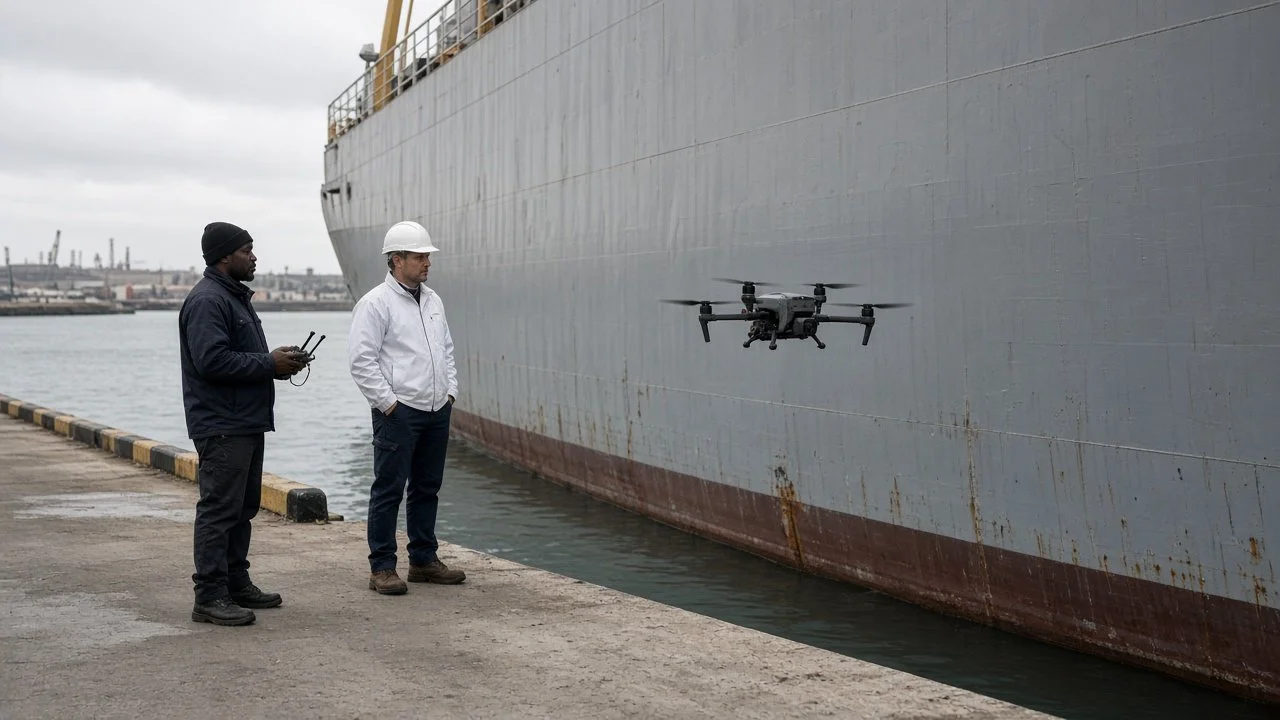

A marine drone inspection can be a useful way to look at a hull, a structure, or a space that is awkward, high, or only briefly accessible, before the ship is committed to a year-end dry-dock or to a longer repair list. It is not, by itself, a survey, and it is not a promise that a class society, a flag or an insurer will accept drone images in place of a close-up or an internal examination. Used well, it helps the superintendent decide what to open, what to clean, and what to leave until the yard. Used badly, it is a flight that produces pictures no one later trusts.
This article is a practical guide for superintendents and masters planning drone work in The Bahamas or South Florida. The year-end dry-dock in the title is a planning hook, not a forecast of any ship's programme. The article does not invent local permit rules, and it does not claim that drones always replace a person or a diver.
Planning a marine drone inspection before the ship is alongside
The first useful message names the areas to be looked at, and why, not a general request for “a drone survey.” Send:
- The vessel name, ETA, berth or anchorage, and a 24-hour contact
- The areas or items to be inspected, and whether the work is outside, in a cargo space, or in another enclosed or restricted place
- The purpose: a pre-docking look, a suspected defect, a follow-up after a repair, or a general condition record
- Any class, flag or company expectation about the images or the report
- Weather or operational limits already known, including cargo operations, cranes, or other air traffic at the berth
- How long the ship will actually be available
Marine Technical Services at Russmill Maritime Services includes drone inspections. Send the job through the technical contact form. The FAQs set out the usual information to send with a call. Permissions, access to the berth, and any restriction on flying at the terminal or in the port, must be confirmed for the actual place and date of work. Those rules vary, and they should be taken from the current official and terminal sources, not from a remembered example.
Weather, light and the ship's own operations will often decide whether the flight can be completed as planned. Wind, rain, poor light, cargo dust, and moving cranes are ordinary reasons to wait or to shorten the job. A second window, if the ship has one, should be identified early. If the work is inside a space, enclosed-space rules still apply to anyone who has to enter; a drone does not remove that duty. The ship's own restrictions, a terminal rule on cameras or flying, and any other work already booked at the same berth, should be in the first message so that the plan is not built on an assumption that the air over the ship is clear.
What the images can, and cannot, replace
A good drone inspection produces dated, labelled images or video from which a superintendent can see coating condition, obvious deformation, wasting, cracks that are visible at the resolution used, and access or staging questions for a later repair. It can reduce the time spent sending a person into a high or awkward place for a first look. It cannot, by itself, measure residual thickness, prove the tightness of a tank, or stand in for a close-up survey unless the attending surveyor, the class society and the flag have agreed that it may.
Do not assume that every defect will be visible, or that a clean-looking image is a clean structure. Marine growth, poor light, glare, and a camera angle can hide as well as reveal. If a defect is suspected, the report should say so plainly, and the ship should still plan the closer examination that the suspicion requires.
Quote requests are answered within 12 to 24 hours. For urgent vessel needs, call +1 242 821 7780. Office hours are Monday to Friday, 9:00 am to 5:30 pm. After the work, the ship should receive a clear set of images or video, labelled so that a person who was not present can see which part of the ship they show, and a short note of any limitation: weather, access, or areas that could not be flown.
Frequently asked questions
Will class always accept a drone inspection instead of a close-up survey? No. Confirm with the attending surveyor and the class society for the actual survey. A drone can support planning; it is not automatically survey credit.
Do we need a permit to fly at the berth? Often some form of permission is required from the port, the terminal, or the aviation authority, and those requirements vary. Confirm for the actual place and date. This article does not set out a permit list.
Can a drone replace a diver or a tank entry? Sometimes it can reduce the need for a first entry or a first dive, and sometimes it cannot. The purpose of the inspection, the location, and the rules that apply should decide, not a preference for flying.
Send the inspection list with the first enquiry
If you already know that a marine drone inspection would help before a docking or a repair window in The Bahamas or South Florida, send the areas and the purpose through the technical contact form or email ops@russmillmaritime.com. We will respond within 12 to 24 hours with what can be arranged in the time available.