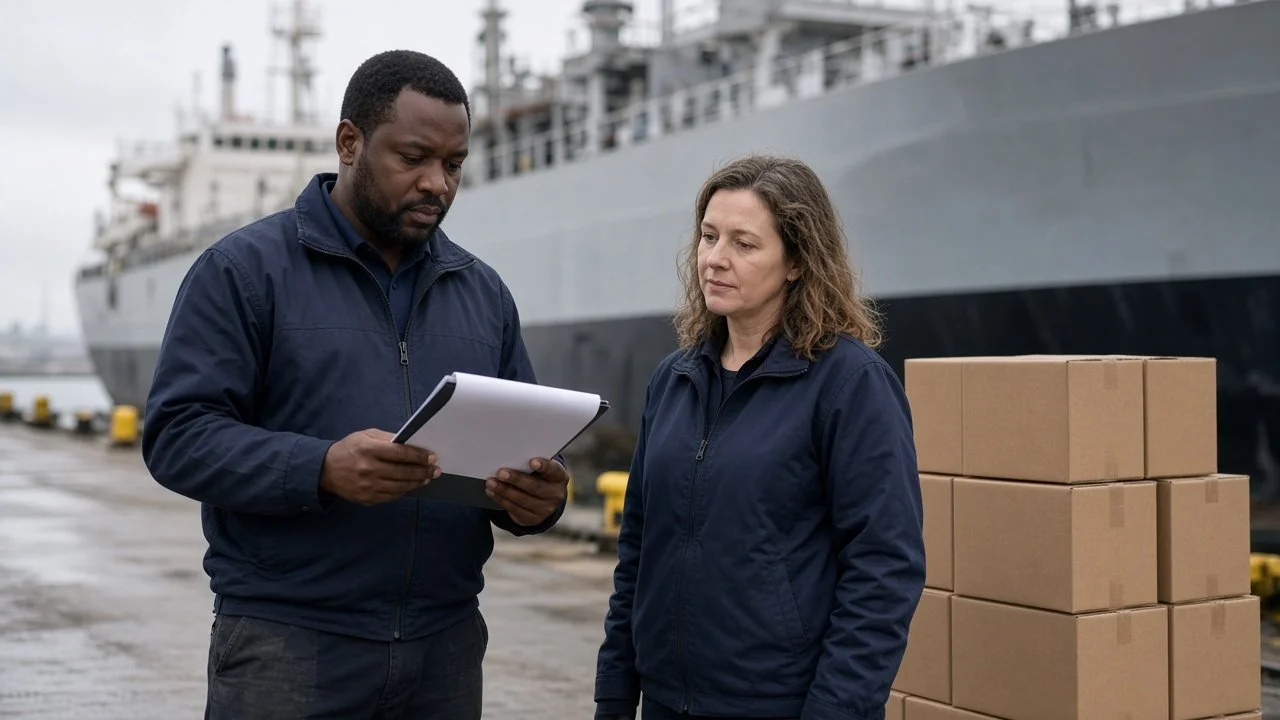

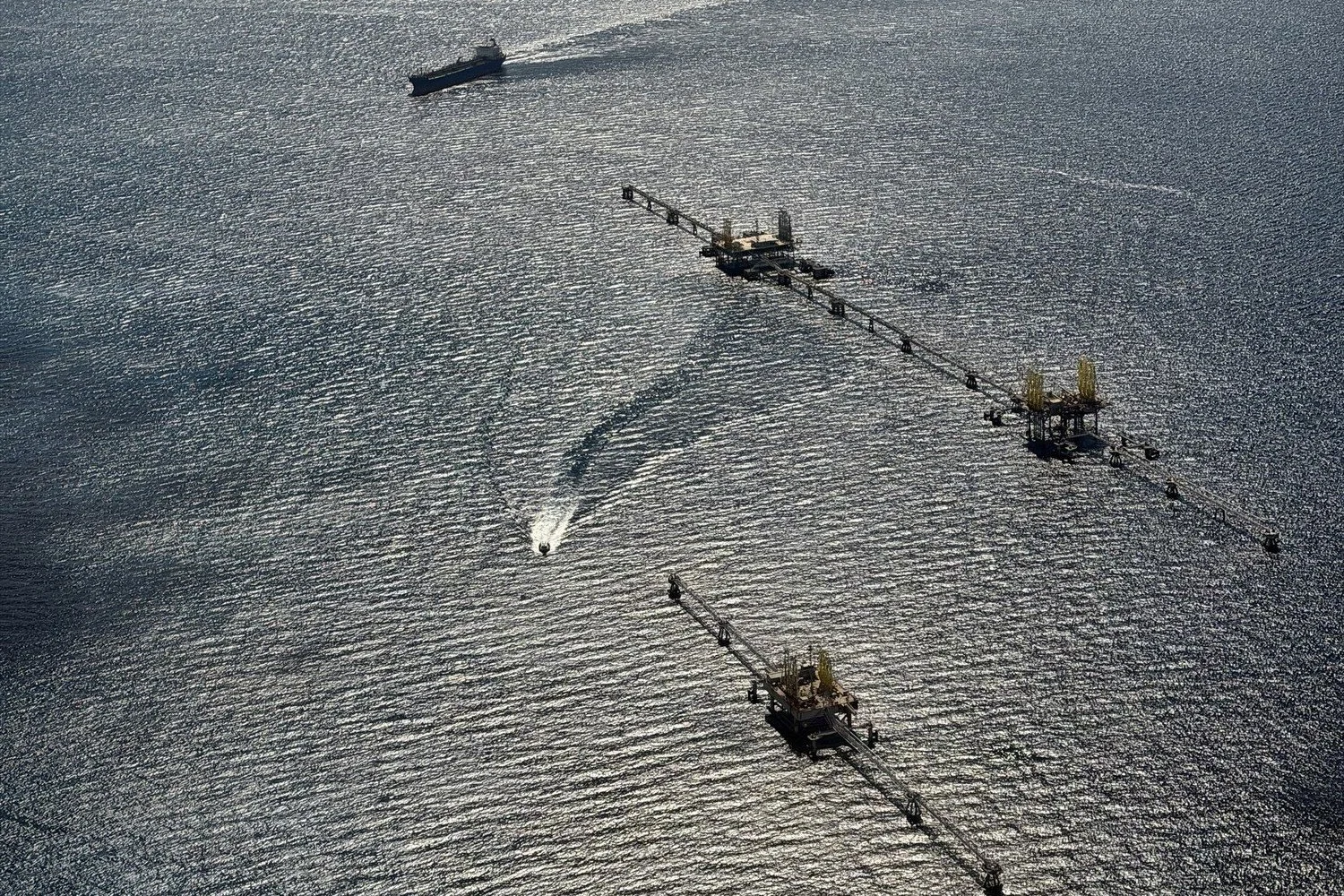
South Riding Point agency work, and a call at BORCO, is not the same as a short stay at a commercial berth in Freeport Harbour. Both are confirmed oil terminals on Grand Bahama, and a ship calling there still needs clearance, husbandry, stores and, often, a launch or a crew arrangement, planned around the terminal's own operations rather than around an open quay. The terminals' facilities, products, berth lengths and commercial terms are their own. This article does not invent those figures, and the photographs are present-day illustrations of a tanker at a coastal terminal, not labelled views of a particular berth.
This is a practical guide for masters, superintendents and operators coordinating agency and supply support for a call at South Riding Point or BORCO. It covers what to send, how to time stores to a terminal window, and why access should be agreed early.
What South Riding Point agency support usually covers
The agency side of a terminal call still begins with formalities and information. Port Agency & Logistics covers clearance, husbandry, crew changes and the usual arrival and departure arrangements at the confirmed ports in The Bahamas, including South Riding Point and BORCO. Send, as early as you can:
- The vessel name, the intended arrival window, which terminal is intended, and a 24-hour contact
- The reason for the call, in outline, without assuming a cargo or a product
- Crew changes, joining or leaving, and any medical or welfare needs already known
- Stores, bonded goods, spare parts and gases that must arrive during the stay
- Whether a launch, transport or attending technician or surveyor will need access
- Any constraint the terminal or the last agent has already given you
Use the port agency contact form for that picture. If the same stay needs a stores list, include Ship Supply in the first message. A terminal window is a poor time to discover that a critical spare, a bonded order or a service engineer is on a different timetable from the cargo or the berth.
The terminal will have its own rules for access, security, hot work, boats and materials. Those should be taken from the terminal, not from an article. If the ship already has a terminal handbook, a last-call note, or a restriction on cameras, phones or vehicles, send that with the first message so it is not rediscovered at the gate. The agent's job is to help the ship arrive, stay and leave with the formalities, the people and the supplies in the right place, not to describe the cargo operation itself.
Timing stores and people to a terminal window
A call at an oil terminal can be shorter, or less predictable, than it looks in a voyage plan. A berthing time, a cargo window, weather, or a change of orders can move the gangway. Send need-by dates that are tied to the ship's actual access, not only to the advertised arrival day. If stores or people must be on board before the ship is all fast, or can only be received after cargo has started, say so.
If the ship will be at a sea berth or otherwise not on an open quay, a launch may be required. That should be in the first message, together with any limit on what can be carried. Crew changes should be planned with the same care: formalities, transport, and the point in the stay when people can actually join or leave.
Quote requests are answered within 12 to 24 hours. For urgent vessel needs, call +1 242 821 7780. Office hours are Monday to Friday, 9:00 am to 5:30 pm. A change to the ETA, the terminal, or the list of work should be passed on as soon as it is known, so that deliveries and attendances can be moved with the ship rather than arriving for a window that has already closed.
Before departure, agree what was delivered, what was landed, and what remains outstanding. A short packing list and a record of attendances save an argument later, when the ship is already at sea.
Frequently asked questions
Is agency support required if the terminal is already handling the cargo? The terminal's work and the ship's formalities, stores and husbandry are not the same job. Whether you use an agent is a matter for the owner or the operator, but clearance, crew and stores still have to be arranged somehow. Send the picture early if you want those parts coordinated with the stay.
Can stores be delivered while the ship is at the terminal? That depends on the terminal's access arrangements and on the stage of the call. Ask early, and give a need-by date that is tied to the ship's access, not only to the calendar.
Does the same information cover both South Riding Point and BORCO? The kind of information is the same. The intended terminal, the window and any access limit still have to be stated clearly, because the two are not the same place.
Send the terminal and the window with the first enquiry
If you already have a call at South Riding Point or BORCO in view, send the ETA, the terminal and the stores or husbandry list through the port agency contact form or email ops@russmillmaritime.com. We will respond within 12 to 24 hours with a plan that sits beside the terminal's own operations.